In the landscape of modern facility management, “siloed” security systems are rapidly becoming a thing of the past. For B2B stakeholders—ranging from property developers to security integrators—the goal is no longer just to install a doorbell, but to create a cohesive environment where communication and entry management work in tandem. The shift toward an IP video intercom framework is the primary driver of this evolution, offering a level of flexibility that traditional analog systems simply cannot match.
The Technical Synergy of IP and Access Management
At its core, an IP video door phone intercom operates on the Internet Protocol (IP), which allows it to act as a sophisticated node on a building’s existing Local Area Network (LAN). Unlike legacy systems that require dedicated point-to-point wiring, IP-based units utilize standard RJ45 Ethernet connections. This standardization is what makes integration with broader access control systems possible.
Integration typically occurs at three levels:
- Network Level: Both the intercom and the access controllers reside on the same network, allowing for centralized management via a single software platform.
- Relay Level: The outdoor station features I/O (Input/Output) relays that physically connect to magnetic or electronic locks. When a visitor is verified, the command to unlock is sent digitally from the indoor monitor or a mobile app to the hardware.
- Data Level: High-end systems can sync visitor logs, facial recognition databases, and RFID card permissions across the entire facility, ensuring a unified security audit trail.
Advanced Authentication in IP Video Door Phone Intercoms
The modern IP video door phone intercom is significantly more than a camera and a button. It serves as a multi-modal authentication terminal. By integrating advanced biometric and digital credentials directly into the intercom hardware, businesses can streamline the entry process for both regular employees and one-time visitors.
Technologies such as “Liveness Detection” in facial recognition prevent unauthorized entry using photos or videos, while QR code-based “Virtual Keys” can be issued to delivery personnel for time-restricted access. This intersection of “seeing” and “verifying” is what defines a modern smart building.
Trudian: Setting the Standard for Integrated IP Solutions
As a leading manufacturer in the security sector, Trudian provides a range of IP solutions designed specifically for high-traffic commercial and residential environments. Their hardware is built to bridge the gap between simple communication and complex facility management.
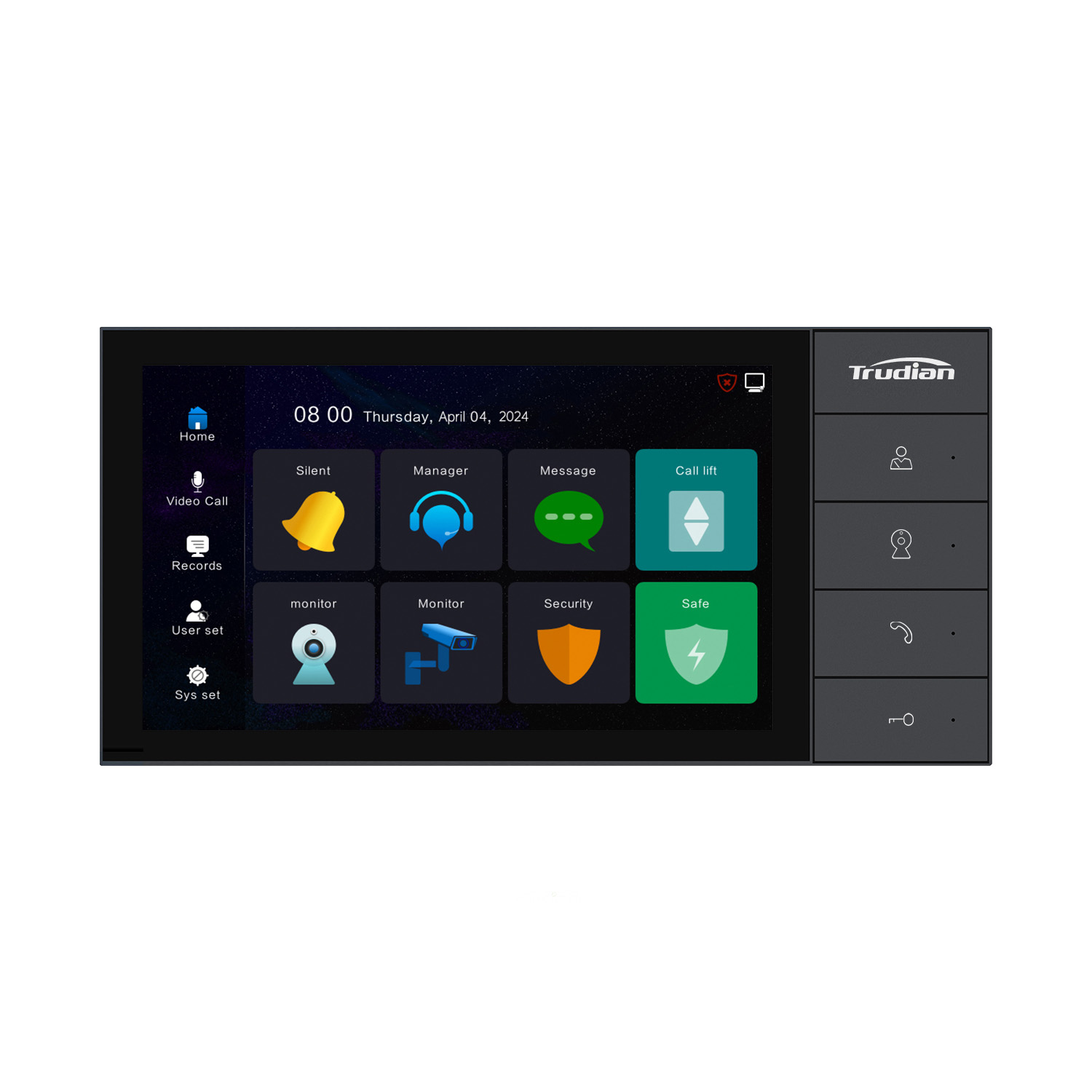
The Trudian IP series, exemplified by models like the TD-D801 and the TD-R39 indoor monitor, showcases high-precision engineering:
- Diverse Unlocking Methods: Support for facial recognition (with capacities up to 20,000 faces), IC/ID cards, PIN codes, and QR codes ensures that the system fits any existing access control protocol.
- High-Definition Monitoring: Features 8-inch capacitive touch screens with 1280×800 resolution and 2-megapixel cameras for crystal-clear visual verification.
- Platform Compatibility: Seamlessly integrates with the Trudian Community Management Center Platform, allowing property managers to control multiple entry points and elevator linkages from a central dashboard.
- Expansion Capabilities: Indoor monitors like the TD-R39 support up to 8 alarm zones, allowing the intercom to act as a hub for smoke detectors, gas sensors, and window alarms.
Streamlining Operations for 2B Enterprises
For businesses, the integration of an IP video intercom translates to tangible ROI. It reduces the need for physical reception desks and on-site security guards by allowing remote verification via mobile apps. Whether it is a warehouse receiving a midnight shipment or a corporate office managing a visiting client, the ability to see, speak, and grant access from anywhere in the world transforms security from a hurdle into a seamless operational advantage.
The fusion of IP video technology and access control is now the baseline for smart city infrastructure. By deploying scalable hardware like Trudian’s, organizations can build a security framework that is both efficient today and adaptable for tomorrow.
