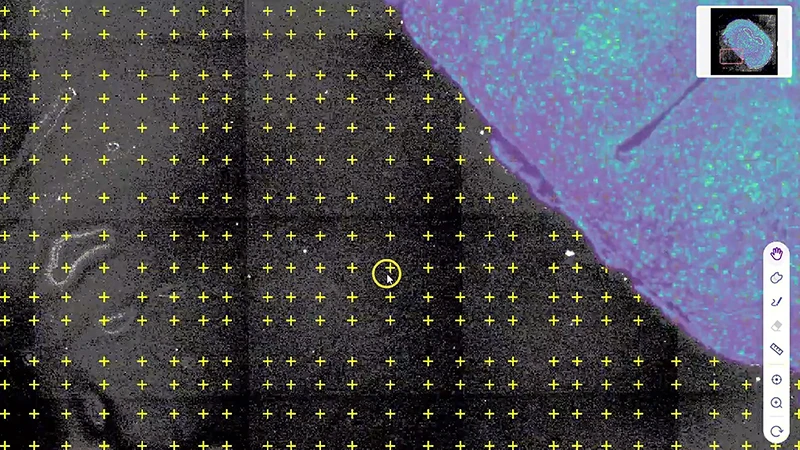
An effective analysis pipeline depends on unified digital tools. For scientists working with complex spatial biology data, a fragmented collection of programs creates significant bottlenecks. This is where a dedicated all-in-one spatial omics software suite becomes essential, and platforms developed by providers like STOmics are engineered to meet this need.
Unifying the Analytical Workflow
A primary advantage of comprehensive spatial omics software is the consolidation of multiple steps. Instead of transferring data between disparate applications for imaging, sequencing alignment, and visualization, an integrated system manages the flow. STOmics offers this cohesion through solutions like its SAW and StereoMap platforms, which are designed to work seamlessly with data from its proprietary Stereo-seq technology. This end-to-end approach minimizes compatibility issues and streamlines the journey from raw data to initial visualization.
Facilitating Multi-Omic Data Integration
The power of spatial biology multiplies when gene expression and protein data are analyzed together. Disconnected software often struggles with this synthesis. Robust spatial omics software must natively support concurrent multi-omic analysis. The bioinformatics tools provided by STOmics support the simultaneous measurement of the transcriptome and proteome from a single tissue section. This capability, built into the all-in-one spatial omics software, allows researchers to explore layered biological questions within a single analytical environment.
Simplifying Access for Specialized Research
The technical barrier to spatial data analysis can be high. Well-designed software addresses this by offering guided workflows and intuitive interfaces tailored to the data’s unique spatial nature. The goal of an all-in-one spatial omics software is to make advanced analysis accessible to life science researchers without requiring deep computational expertise. By providing these tailored bioinformatics solutions, STOmics supports its users in extracting precise spatial insights from their high-resolution tissue section data.
Implementing a cohesive software strategy is a critical step in spatial omics research. An all-in-one spatial omics software framework reduces complexity and accelerates discovery. For teams utilizing the Stereo-seq platform, the integrated analytical tools from STOmics provide a structured and efficient path from data generation to biological insight.
