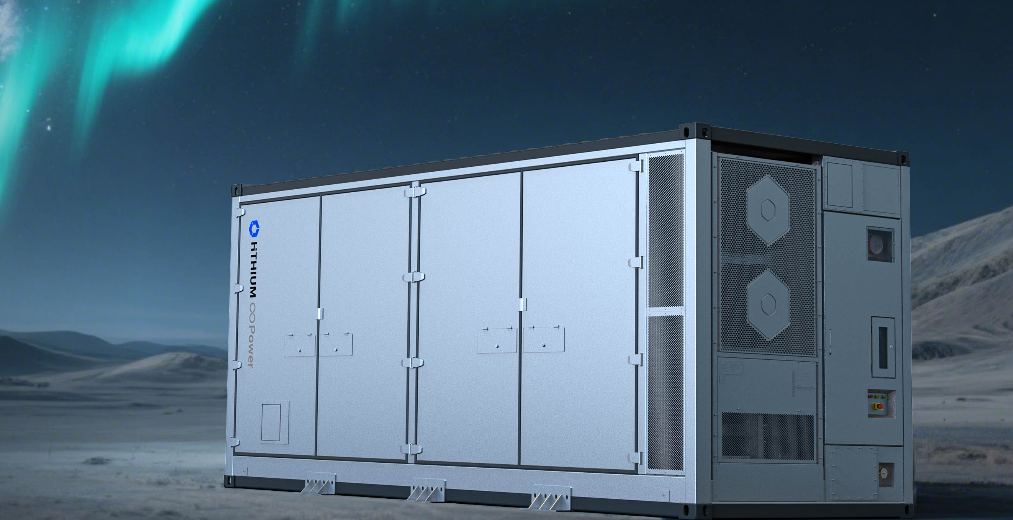
The transition to renewable energy sources has made one technology critical for grid stability and reliability: energy storage. While various technologies compete in this space, one stands out as the most promising energy storage solution for utility-scale and commercial applications: advanced Lithium Iron Phosphate (LFP) battery technology. This dominance is due to its unrivaled combination of technical maturity, cost-effectiveness, and long-term performance, making it the primary choice for B2B stakeholders who demand reliable, scalable, and economically viable solutions.
Why Lithium-Ion is the Most Promising: Scale and Maturity
To qualify as the most promising solution, a technology must be widely scalable and proven in real-world environments. Lithium-ion battery energy storage solutions (BESS), particularly the LFP chemistry, have achieved massive global scale, driving down costs and solidifying the supply chain. This maturity is a significant advantage in the B2B market, where project risk mitigation and predictable economics are paramount.
The focus of specialized BESS manufacturers, such as HiTHIUM, further accelerates this promise. By dedicating their resources exclusively to stationary storage, they are able to rapidly innovate and refine cell technology far beyond what is required for mobile applications. For grid operators and developers, this dedicated focus translates into continuous improvements in critical areas: safety, efficiency, and longevity. The sheer volume of deployments and operational data has established LFP BESS as the reliable anchor for a global energy transition, confirming its status as the most dependable and investable storage technology today.
The Promise of Endurance: HiTHIUM Energy Storage for Long-Term Value
The true measure of a promising storage solution is its ability to perform reliably over decades of operation. This is where dedicated stationary HiTHIUM energy storage, particularly those offered by HiTHIUM, fulfill the promise of long-term economic returns. Longevity directly reduces the total cost of ownership (TCO) for large-scale energy projects.
HiTHIUM’s product specialization is rooted in maximizing the lifespan and usable capacity of its LFP cells. The core offering, such as the ESS Cell 314Ah, is specifically engineered for exceptional cyclic life, boasting a nominal cycle life of greater than or equal to 13,000. This is a crucial metric for the B2B sector, where high-throughput daily cycling is common for services like frequency regulation and arbitrage. Furthermore, these cells offer an ultra-wide operating temperature range, ensuring performance stability and reliability across diverse global climates—a key technical assurance for developers working on international projects.
For the emerging segment of Long-Duration Energy Storage (LDES), the company addresses the promise of multi-hour storage with products like the ∞Cell 1175Ah. This cell offers a nominal cycle life of greater than or equal to 11,000, confirming the enduring performance required for projects needing four hours or more of continuous discharge. By delivering cells with these high endurance and safety certifications (like UL 9540A and UL 1973), HiTHIUM proves that LFP remains the most technologically and commercially viable platform to meet the evolving demands of the grid.
Integrated Solutions Realize the Promise of Performance
The potential of an individual battery cell is only realized when it is integrated into a high-performance system. The delivery of complete, sophisticated battery energy storage solutions is essential for B2B deployment. HiTHIUM provides fully integrated systems that combine their robust cells with advanced thermal management.
The liquid-cooled module offerings, such exemplified by the ESS Module 104kWh, are central to realizing consistent performance. This module integrates LFP cells with a sophisticated liquid-cooling system utilizing a Glycol-Water solution. Thermal management is vital, as operating batteries within an optimal temperature range directly protects their cycle life and sustains high efficiency throughout the system’s lifespan. The Module also offers high energy density—greater than or equal to 156 Wh/kg and greater than or equal to 244 Wh/L—demonstrating that HiTHIUM’s focus on safety and longevity is achieved without compromising the energy output required by large projects.
These systems are designed to be flexible, supporting both string and central Power Conversion System (PCS) architectures. This adaptability is critical for system integrators, allowing them to tailor the installation to specific site constraints and grid requirements, ultimately solidifying lithium-ion’s position as the most versatile and promising technology across a breadth of energy storage applications.
In summary
The question of the most promising energy storage technology is answered by evaluating current deployment, economic viability, and future scalability. Advanced LFP-based lithium-ion BESS clearly leads on all fronts. Its established supply chain and proven efficiency, combined with continuous innovation from specialists like HiTHIUM, make it the most reliable tool for managing the complexities of a renewable-dominated grid. By offering high-capacity, long-life, and safety-certified battery energy storage solutions, HiTHIUM is directly enabling utilities and large industrial consumers to leverage the full, enduring promise of lithium-ion technology to build a truly resilient and decarbonized energy future.
