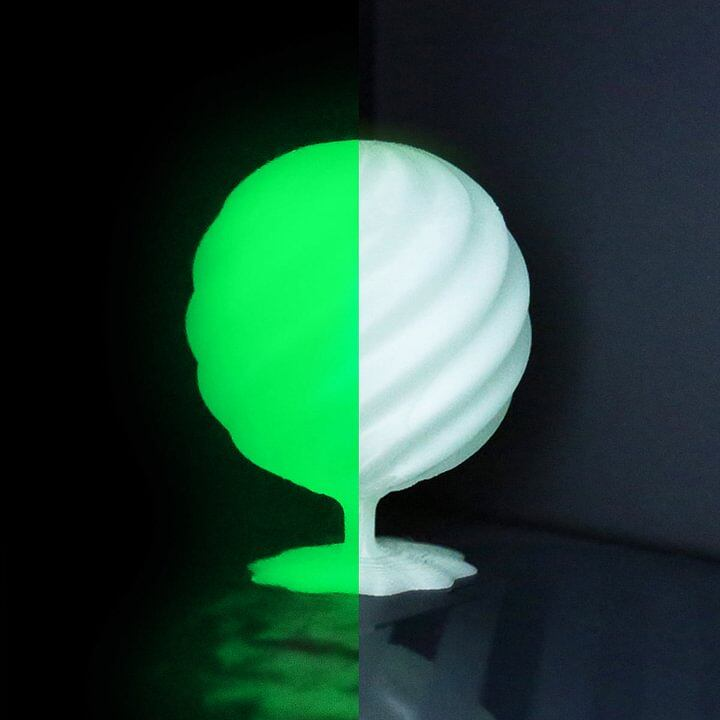
For hobbyists and home users who enjoy creative printing, luminous materials often raise an important question: can 3D printer glow in the dark filament cause faster nozzle wear? Many people experimenting with 3D print glow in the dark filaments are aware that these materials contain phosphorescent particles that create the glowing effect. These particles can influence how the filament interacts with the nozzle during long printing sessions. Understanding how filament quality affects this process helps users maintain consistent print performance and extend the service life of their printers.
Abrasive Particles and Nozzle Interaction
The glowing effect in 3D print glow in the dark filaments typically comes from phosphorescent additives blended into the base material. During printing, these particles pass through the nozzle together with melted filament. Over time, repeated contact can gradually affect the inner surface of the nozzle.
However, the level of wear is often related to how evenly these additives are distributed and how stable the base material remains during extrusion. When a 3D printer glow in the dark filament is manufactured with careful material blending and controlled particle size, the extrusion process tends to remain more consistent. For individual users printing decorative models, cosplay props, or night-visible markers, filament consistency can play a practical role in maintaining predictable results.
Material Quality and Printing Stability
Filament quality also affects how smoothly the material flows through the hot end. Uneven additives or unstable material composition can increase friction and lead to inconsistent extrusion. In contrast, well-processed 3D print glow in the dark filaments are designed to maintain steady melting behavior while preserving the luminous effect.
For example, the PLA glow-in-the-dark filament offered by CaiLab is produced in a 1.75 mm format with spool options such as 200 g and 1 kg. The material is designed for standard desktop printers and focuses on stable printing behavior while delivering the glowing appearance often used in creative projects. Products like this illustrate how a 3D printer with glow in the dark filament can balance visual performance with practical usability for everyday makers.
Conclusion
High-quality luminous materials can influence nozzle wear, but the impact largely depends on material consistency and printing conditions. Well-manufactured 3D print glow in the dark filaments generally maintain smoother extrusion and reduce irregular friction inside the nozzle. Products developed by CaiLab demonstrate how thoughtful material formulation can support reliable printing while delivering the visual appeal users expect from a 3D printer glow in the dark filament. For home creators exploring glowing designs, choosing stable materials and maintaining good printing practices helps balance creativity with long-term printer care.
