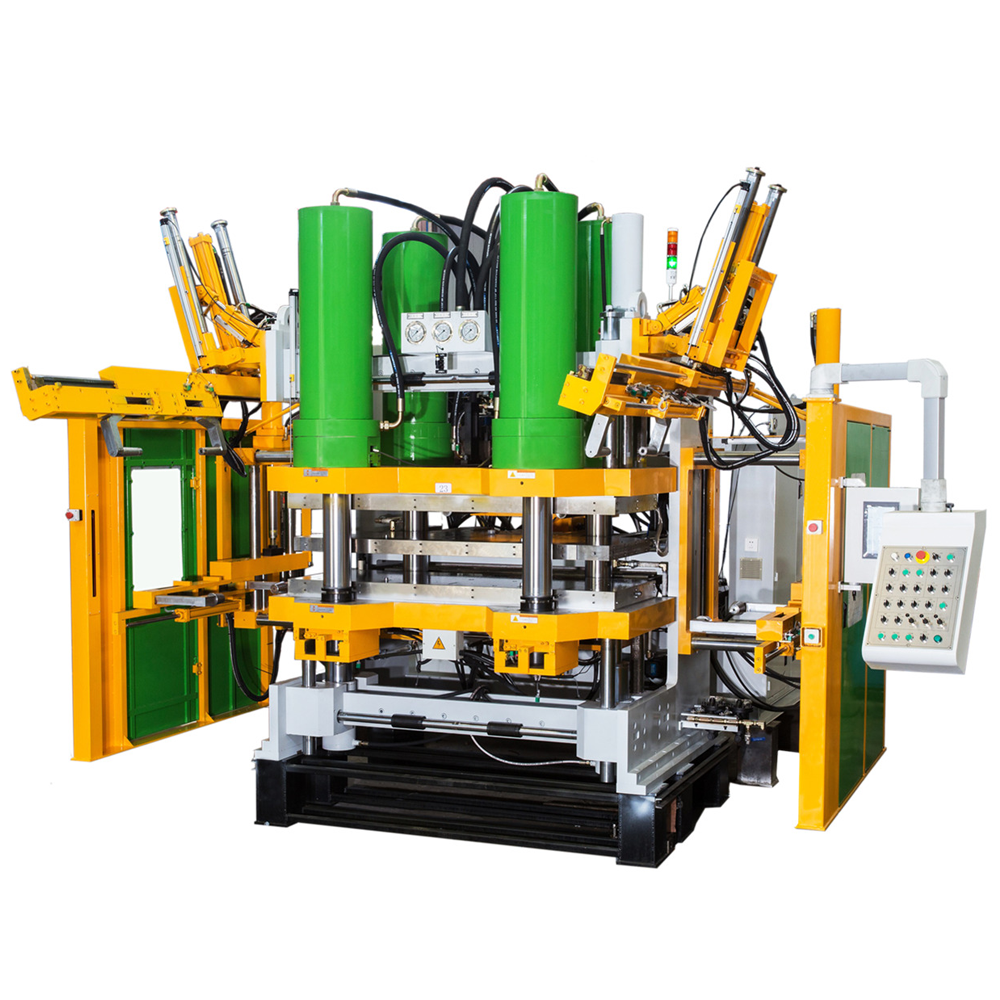
Hydraulic stability is central to repeatable vulcanization because pressure must remain controlled through thousands of production cycles. Buyers of a rubber belt vulcanizing machine need to examine system pressure, component loading, oil condition, cooling, contamination control, and maintenance access together. Long service life depends on how these factors interact under the plant’s real duty cycle.
Stable operation is not achieved by specifying a high pressure alone. The system must produce the necessary clamping force without excessive leakage, heat, shock, or control drift. Sound machine selection, consistent operating practices, and condition-based maintenance therefore matter as much as the nominal design values listed on a technical sheet.
Scale Hydraulic Capacity to the Press Structure
The HYL series uses a listed system pressure of 21 MPa across models ranging from 1,000 to 9,000 kN of clamping force. This common reference allows a rubber belt track vulcanizing press to scale through cylinder area and structural capacity rather than through uncontrolled pressure increases. Proper matching limits unnecessary stress on hoses, seals, valves, and connections.
Machine geometry affects hydraulic demand during closing and pressure build-up. Platen spacing varies from 500 to 900 mm, while mold-closing strokes extend from 400 to 720 mm. Engineers should confirm that motion speed, available flow, mold mass, and production timing remain compatible across the full stroke of the selected model.
Clamping force also has to correspond with the track and mold. Maximum track width ranges from 400 mm to as much as 914 mm, and top platen dimensions reach 2,250 x 1,050 mm. Using a model close to the application reduces the temptation to compensate for poor sizing through aggressive pressure settings.
Structural alignment supports the hydraulic circuit by distributing load evenly. Commissioning checks need to verify platen parallelism, cylinder mounting, guide condition, and foundation level. Uneven mechanical resistance can create pressure fluctuations and localized wear that may be misdiagnosed as a pump or valve problem.
Duty cycle should be stated realistically during specification. Continuous high-load work, frequent short cycles, and intermittent large molds impose different thermal and flow demands. Comparing expected production hours with reservoir, cooling, and component capacity reduces the risk of selecting a system that is stable only during short demonstrations.
Protect Oil Quality and Control Response
A maintenance plan for HWAYI equipment requires treating hydraulic oil as a working component. Clean fluid supports valve response, seal life, and heat transfer. Sampling for contamination, viscosity, water content, and oxidation gives maintenance teams evidence for filtration or oil changes instead of relying only on fixed calendar intervals.
Temperature management is equally important. Excessive oil heat can reduce viscosity and accelerate seal degradation, while very cold oil can slow response and increase pressure loss. Cooling surfaces, heat exchangers, reservoir ventilation, and ambient workshop conditions should be maintained according to the limits defined for the installed system.
Pressure sensors and control valves need periodic verification because small drift can affect clamping consistency. Trend data from repeated cycles helps identify gradual changes before they become stoppages. Maintenance personnel can compare pressure build-up time, holding stability, oil temperature, and alarm history across products and shifts.
Maintenance teams need to correct leaks at their source rather than treat them as routine housekeeping. Loose fittings, damaged hoses, worn seals, and scored surfaces can reduce pressure and introduce contamination. A clean machine also makes early leakage easier to detect, improving both safety and the reliability of diagnostic observations.
Replacement parts must preserve the original pressure, flow, temperature, and material ratings. Substituting a visually similar hose or seal may change response or service life. Technical purchasing should therefore use verified part specifications and record approved alternatives before an urgent breakdown forces an improvised decision.
Standardize Operation and Preventive Maintenance
An integrated HWAYI line may connect winding, preforming, vulcanization, and automatic transfer. Coordinated sequencing prevents abrupt or conflicting movements around the press. With predictable loading, the rubber belt vulcanizing machine begins from consistent mold positions and hydraulic starting conditions.
Operators need approved recipes and defined limits for pressure, temperature, timing, and mold setup. Unauthorised adjustment can hide a tooling or material problem while increasing hydraulic load. Access control, recipe records, and shift handover notes help production managers preserve stable settings over time.
Preventive tasks should cover filters, breathers, hoses, seals, fasteners, electrical connections, sensors, pumps, and valve blocks. The schedule can be refined using actual operating hours and trend data. Maintenance teams need to identify spare parts for high-wear or long-lead items before a failure interrupts a critical production run.
Post-maintenance testing closes the reliability loop. Pressure holding, controlled motion, alarms, and leakage should be checked before full production resumes. Recording the before-and-after condition allows engineers to judge whether the intervention corrected the underlying trend or only restored temporary operation.
For a rubber belt track vulcanizing press, long-term stability is the outcome of correct sizing, controlled fluid condition, accurate sensing, disciplined operation, and planned maintenance. The published 21 MPa system pressure and model-specific dimensions provide a technical starting point, while plant-level practices determine whether that capability remains repeatable throughout the machine’s working life.
