For a biotech company preparing its first clinical study, the choice of an early-phase CRO can shape how quickly a program moves — or stalls. Phase I and Phase IIa studies carry a different risk profile than later-stage trials: the primary goals are establishing safety, understanding how a compound behaves in the body, and generating the data needed to support further development. A partner without deep experience in this specific stage can create delays that are costly to correct later.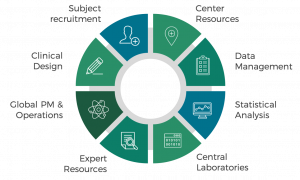
This guide looks at four areas biotechs commonly evaluate when comparing early-phase partners: unit capacity for First-in-Human studies, safety monitoring practices, PK/PD expertise, and regulatory support for IND filing. None of these factors works in isolation — a strong regulatory track record matters less if the underlying study data was not generated with rigorous PK/PD or safety oversight, so it is usually worth reviewing all four together rather than treating any one as a standalone deciding factor.
Assessing Phase I Unit Capacity and Study Design Support
Early clinical development typically covers Phase I and Phase IIa studies, with objectives centered on safety, tolerability, and the pharmacokinetic (PK) and pharmacodynamic (PD) properties of an investigational drug, along with early signals of efficacy. Running these studies well generally requires more than an available clinical unit — it requires a team that can build a study roadmap tailored to the specific molecule and indication.
Tigermed describes its Early Phase group as working from First-in-Human through Proof-of-Concept, with teams that collaborate on study roadmaps intended to reach go/no-go decisions efficiently. According to the company’s published service description, this includes access to multiple clinical facilities, biometrics capabilities, and dedicated project management experience for Phase I and Phase IIa studies. For sponsors, questions worth asking a prospective partner include how many active clinical units are available, what patient or healthy-volunteer populations they can access, and how study timelines have historically compared to plan.
Safety Monitoring Through First-in-Human and Proof-of-Concept Studies
Because First-in-Human studies introduce a compound into people for the first time, safety monitoring processes are typically a central evaluation point for biotechs. This includes how dose escalation decisions are made, how adverse events are tracked and reported, and how quickly a study team can respond if unexpected findings arise during a cohort.
Tigermed’s Early Phase offering notes a focus on risk mitigation as part of its Phase I strategy, alongside recruitment support through dedicated centers for identifying suitable, sometimes hard-to-find patient populations for specialized trials. Sponsors evaluating any CRO in this category may want to review specific examples of how dose-escalation or stopping-rule decisions were handled in past studies, rather than relying only on general safety statements, since experience managing actual safety findings can provide more insight into a team’s processes than general descriptions of those processes.
PK/PD Expertise and Why It Shapes Later-Stage Decisions
Pharmacokinetic and pharmacodynamic data generated in early trials often informs the dosing strategy carried into later-stage studies, which makes PK/PD expertise a meaningful differentiator among CROs offering early phase clinical research services. Teams with PK/PD specialists embedded in the study design process are generally better positioned to identify dosing questions early, rather than discovering gaps in the data after a study has concluded.
This expertise also connects to bioanalytical capacity, since PK/PD analysis depends on accurate, validated assay methods to measure drug concentrations and biomarker responses. Biotechs comparing partners may find it useful to ask how PK/PD experts are involved during protocol design specifically, rather than only during data analysis after samples are collected, since earlier involvement can reduce the risk of a study reaching its endpoint without answering the dosing questions sponsors need for subsequent phases.
Regulatory Support for IND Filing
A capable early-phase partner is often expected to support more than the clinical study itself — regulatory strategy and submission experience matter considerably when a program is heading toward an IND filing. Tigermed’s regulatory affairs group reports more than 4,000 drug registration projects and over 900 global drug registration customers, with experience spanning IND and NDA submissions, submission dossier preparation, and regulatory strategy development across NMPA, FDA, and EMA frameworks.
Recent company results provide a sense of scale in this area: In its 2023 annual results, the company also reported 29 new U.S. FDA IND projects and more than 1,000 accumulated regulatory affairs projects to that point. Tigermed reported 50 new U.S. FDA IND projects during 2025 and assisted with 85 Chinese IND and multi-region clinical trial applications that received clinical approval across multiple countries in the same period. These figures do not guarantee outcomes for any individual program, but they illustrate the kind of submission volume and multi-agency experience biotechs can reasonably ask a prospective early phase clinical trial partner to demonstrate before an engagement begins.
Matching Partner Capabilities to Program Needs
No single CRO profile fits every early-phase program. A biotech running a straightforward single-ascending-dose study in healthy volunteers has different needs than one preparing a complex Proof-of-Concept trial in a rare disease population with limited patient availability. The relevant comparison point is usually not overall company size, but whether a partner’s specific unit capacity, safety monitoring track record, PK/PD bench strength, and regulatory submission history line up with the study at hand.
Biotechs are generally advised to request references tied to comparable indications and study designs, ask for specifics on past IND submissions in the relevant jurisdiction, and confirm current regulatory standing before finalizing a service agreement. Companies such as Tigermed, which report dedicated early-phase infrastructure alongside a substantial regulatory affairs track record, represent one example of how CROs have organized these capabilities — though each biotech’s own diligence process remains the more reliable basis for a final selection decision.
