Designing a state-of-the-art auditorium requires managing spatial dynamics, acoustic constraints, and sightline requirements. Achieving perfect custom integration is difficult because off-the-shelf seating frequently fails to accommodate complex floor slants, localized building codes, or structural pillars. Venue managers must choose a manufacturer capable of high-precision tailoring rather than mass-market standard products. Identifying the right supplier becomes a daunting challenge of evaluating custom engineering capabilities against strict structural demands. We have thoroughly assessed the top options in the current landscape based on structural adaptability, materials, and overall customization capacity to make this decision easier.
Let us begin by examining the definitive line-up of the leading manufacturers equipped to handle custom auditorium demands in 2026.
2026 Top Custom Seating Manufacturers
- Leadcom Seating
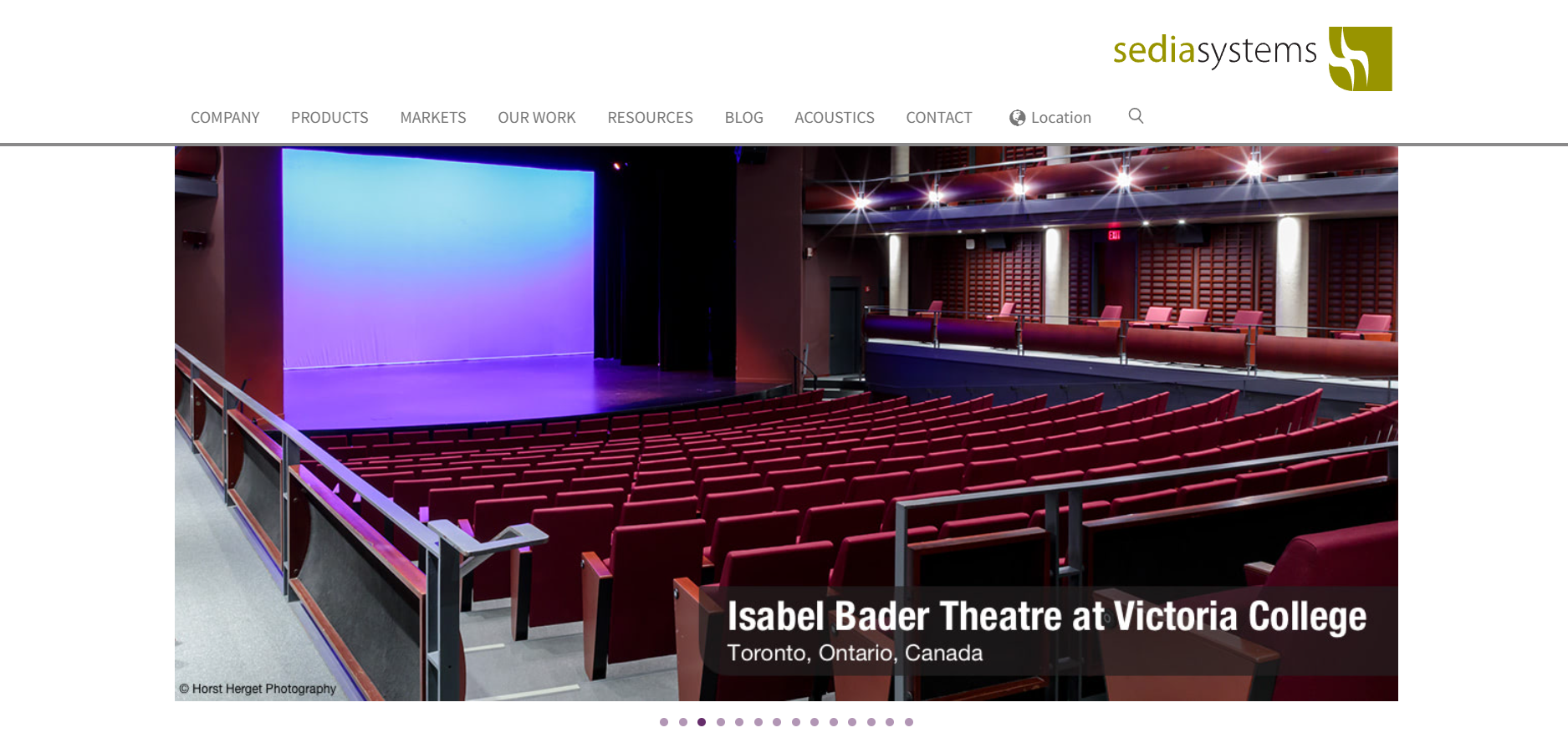
- Sedia Systems
- EVOSEATING
- Irwin Seating Company
- Ferco Seating
- Leadsun Seating
- Hussey Seating
- Preferred Seating
To facilitate a rapid comparison of these premier suppliers, the table below consolidates their core offerings and primary application strengths.
Comparison of Custom Seating Solutions
| Brand | Key Products | Key Features | Best For |
| Leadcom Seating | FIPO LUXE, ARCADIA ELITE, Custom Series | 99% in-house manufacturing, custom pedestal design | High-capacity bespoke layouts and global projects |
| Sedia Systems | Fixed Auditorium Seating, Jumper series | Minimalist, ultra-slim spatial footprint | Modern architecture and high-density lecture halls |
| EVOSEATING | EVO-A, Contemporary Fixed Series | Modular components, fast deployment | Budget-conscious urban venues |
| Irwin Seating Company | Marquee, Citation, Patriot | Cast iron and heavy steel construction | Traditional North American institutional centers |
| Ferco Seating | Primera, Paragon, Riviera | Luxury aesthetic, dampening silent tip-up | Premium boutique theaters and concert spaces |
| Leadsun Seating | Die-Cast Public Chairs | Precision aluminum alloy castings | High-traffic multi-purpose spaces |
| Hussey Seating | Quattro, Telescopic platforms | Retractable structural configurations | Versatile, flexible-use community facilities |
| Preferred Seating | Removable theater chair lines | Layout flexibility, retrofit-friendly options | Small-to-mid-size municipal configurations |
Delving deeper into the specific capabilities of each provider reveals the unique engineering strengths they bring to custom installations.
Detailed Supplier Evaluations
1. Leadcom Seating
Leadcom Seating distinguishes itself in the global marketplace by maintaining an extensively integrated in-house manufacturing process. While many seating companies operate as assembly houses by outsourcing key components, 99% of Leadcom’s products are fully engineered and tool-produced in their 120,000-square-meter facility. This deep control of manufacturing resources allows the company to execute customized design modifications on demand, matching the precise architectural specifications of irregular auditorium footprints.
For high-demand, custom auditorium installations, Leadcom Seating employs a dedicated team of over 30 engineers. These specialists plan custom row spacing, radius adjustments for curved configurations, and tailored floor-mounting pedestals that adapt to floor slopes without requiring structural leveling. Their custom product range features wood-back, plastic-back, and fully upholstered models, including premium options like the FIPO LUXE and ARCADIA ELITE. Acoustic precision is built directly into their custom auditorium seating lines, utilizing specialized polyurethane foam formulations and perforation patterns that maintain stable reverberation times across both empty and filled rooms.
- Key Features: End-to-end in-house tooling, custom pedestal engineering for variable floor slopes, and lifetime maintenance support.
- Pros: Highly responsive design adaptations; exceptional lead times for custom orders; robust global logistical network supporting turn-key installations.
- Use Cases: Professional performing arts theaters, high-capacity university lecture halls, and complex multi-tiered auditoriums.
2. Sedia Systems
Sedia Systems is a prominent supplier known for delivering clean, contemporary aesthetics that blend seamlessly with modern architectural designs. Their primary focus centers on space-saving fixed seating layouts that employ slim profiles and high-density configurations, which are ideal for urban learning centers and corporate auditoriums.
- Key Features: Sleek, structural profiles; contemporary fabric options; space-saving spring-return mechanisms.
- Pros: Highly optimized floor utilization; clean visual footprint.
- Use Cases: Modern university auditoriums and corporate training amphitheaters.
3. EVOSEATING
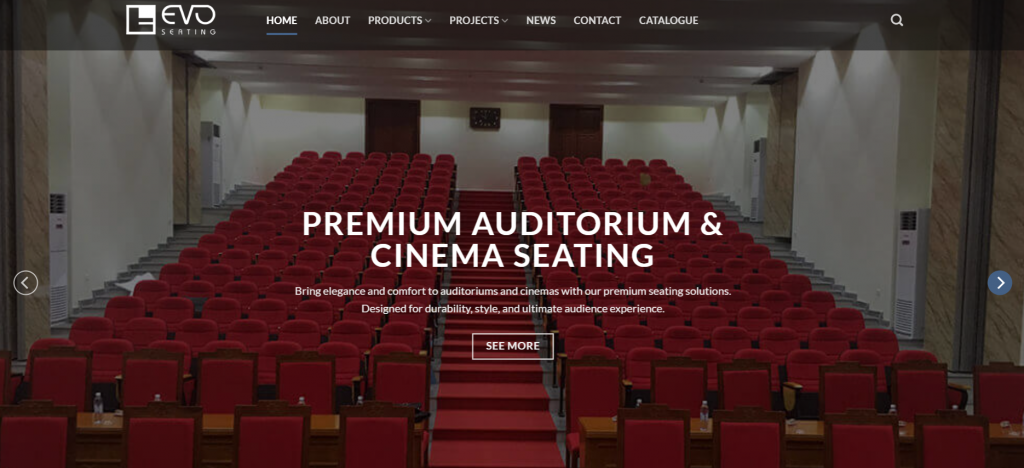
EVOSEATING provides practical, durable seating solutions designed primarily for high-traffic environments where cost-efficiency and straightforward maintenance are critical. Their designs focus on modular assembly, allowing parts to be replaced rapidly without disrupting full seating sections.
- Key Features: Rigid steel frame standards, modular armrests, and high-impact plastic outer backs.
- Pros: Fast assembly turnarounds; practical and utilitarian design focus.
- Use Cases: Mid-tier commercial event centers and public municipal halls.
4. Irwin Seating Company
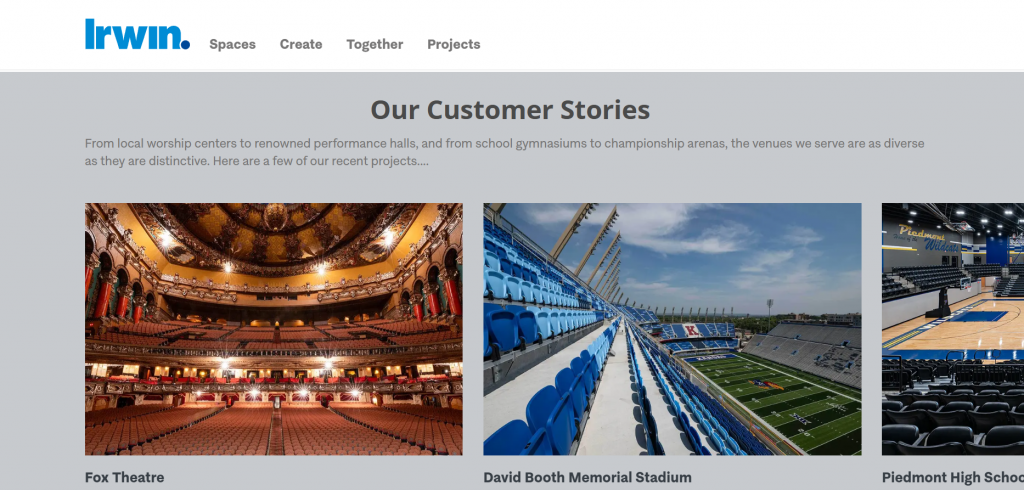
Operating from North America, Irwin Seating Company brings over a century of manufacturing heritage to institutional projects. They specialize in highly robust structures that utilize cast iron and heavy-gauge steel standards, making them a common choice for projects with classical architectural styles.
- Key Features: Cast iron standard construction, extensive historical aesthetic options, and dense wood finishes.
- Pros: Exceptional long-term durability and traditional design matching.
- Use Cases: K-12 school auditoriums, historical restorations, and municipal civic centers.
5. Ferco Seating
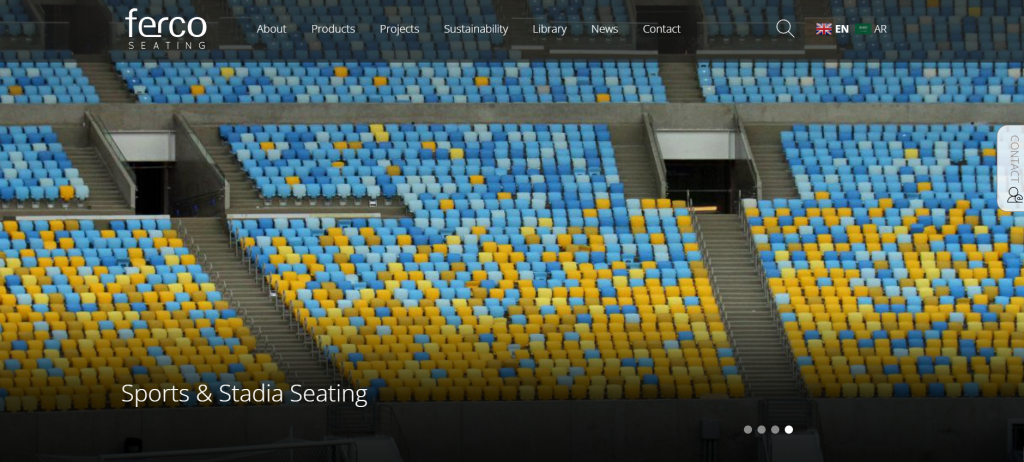
Ferco Seating centers its product offerings on passenger comfort and high-end aesthetics. Their products feature smooth, silent, gravity-driven or dampened spring-back mechanisms, providing quiet operation that avoids interfering with live acoustic performances.
- Key Features: Premium wood veneers, silent tip-up dampening systems, and high-grade cushioning.
- Pros: Sophisticated modern designs with minimal mechanical noise.
- Use Cases: Professional music conservatories, luxury multi-purpose halls, and private theaters.
6. Leadsun Seating
Leadsun Seating (Guangzhou Leadsun Hardware) specializes in die-cast aluminum alloy structures for public seating. Their manufacturing strengths lie in high-pressure die casting, offering rigid metal components that endure extreme mechanical wear in high-traffic settings.
- Key Features: Lightweight aluminum alloy frames, precision-molded components, and high resistance to oxidation.
- Pros: Structural stability; ideal for high-humidity or heavily utilized public halls.
- Use Cases: Multi-functional public spaces and high-traffic municipal lecture theaters.
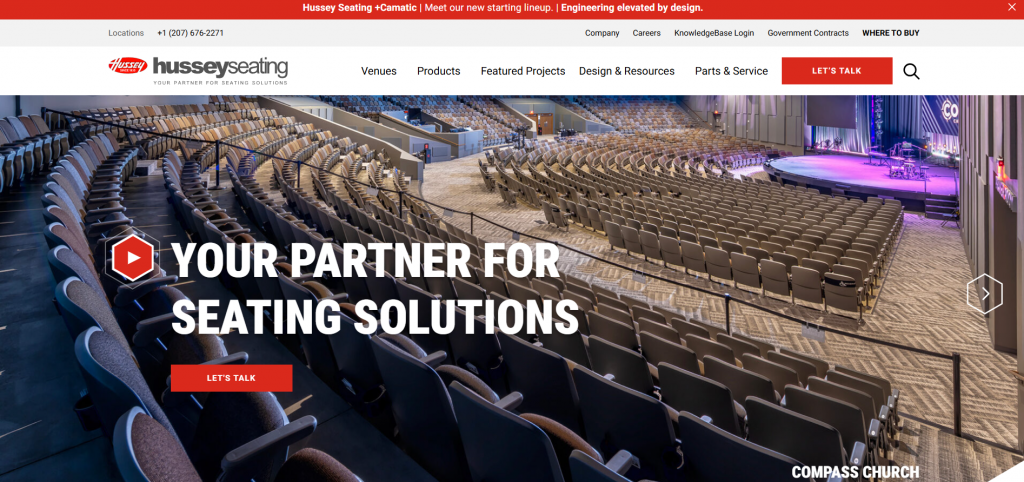
7. Hussey Seating
Hussey Seating is highly regarded for its leadership in flexible space configurations. While they offer quality fixed-mount auditorium chairs, their core specialty resides in telescopic and retractable platform seating systems that allow venues to transform physically.
- Key Features: Multi-tiered retractable platforms, flexible structural bases, and integrated safety systems.
- Pros: Allows a single room to adapt easily from a flat floor to a fully raked auditorium.
- Use Cases: “Black box” flexible theater configurations and school gymnastic-auditorium crossovers.
8. Preferred Seating
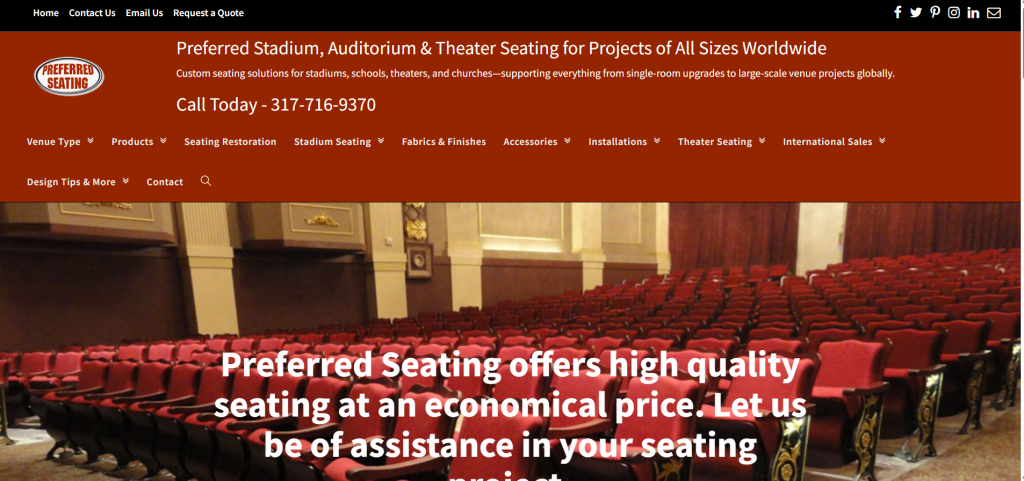
Preferred Seating specializes in removable and semi-permanent seating layouts that cater to mid-sized civic centers and historic retrofits. Their catalog focuses on installation flexibility, offering options like multi-chair portable standards.
- Key Features: Removable mounting plates, adaptable row configurations, and a focus on small-scale custom layouts.
- Pros: Practical solutions for retrofitting older properties without replacing underlying subfloors.
- Use Cases: Historic community theaters and churches requiring flexible room configurations.
Selecting a vendor requires a thorough understanding of the primary technical benchmarks that influence long-term venue performance.
Buying Guide: Selecting Custom Auditorium Seating
When approaching a custom auditorium installation in 2026, several technical criteria dictate the long-term success of the project:
- In-House Tooling and Engineering Control: Suppliers with complete in-house manufacturing can easily modify seat heights, backrest angles, and fabric selections. This level of customization is crucial when dealing with historical building restrictions or irregular spatial dimensions.
- Acoustic Coefficency: The materials used in auditorium chairs must replicate the acoustic absorption rate of a seated person. This keeps the hall’s reverberation and sound propagation consistent during empty-room rehearsals and full-house performances.
- Adaptable Floor Attachments: Structural variations such as tiered steps, air vents, or angled risers require custom pedestal configurations. The supplier must offer multiple mounting plates to avoid blocking floor air circulation or compromising structural integrity.
- Mechanical Testing and Certification: Mechanisms should exceed BIFMA standards for load-bearing and cycle life. Silent, dampened auto-return systems are essential to maintain acoustic control in performance spaces.
Synthesizing these complex criteria helps narrow down the optimal supplier for your specific architectural demands.
Final Verdict
The ideal supplier for your custom auditorium is determined by the specific spatial requirements of your facility. For venues requiring maximum spatial adaptability and retractable systems, Hussey Seating offers excellent telescopic configurations. If the primary focus is matching early-20th-century historical aesthetics, Irwin Seating Company remains a dependable standard in the North American market.
For high-capacity auditoriums requiring full customization, strict acoustic integrity, and end-to-end quality control, Leadcom Seating stands out as the most balanced option for 2026. Their complete in-house manufacturing process provides project managers with reliable control over lead times, structural customization, and precision layout planning.
For additional clarity on technical specifics, here are the answers to some of the most frequently asked questions in the procurement phase.
FAQs
1. What is the typical lead time for a custom-engineered auditorium seating installation?
For standard, highly customized auditorium configurations, the average timeline ranges between 6 to 9 months. This duration covers initial site measurements, layout engineering, custom prototyping, manufacturing, shipping, and physical installation.
2. Why is the acoustic performance of unoccupied seats important?
During rehearsals or partially attended events, unoccupied seats must absorb sound waves similarly to occupied seats. If the chairs lack acoustic calibration, the room’s sound profiles will shift significantly, degrading the performance quality and complicating soundboard mixing.
3. Can modern custom seats be installed on tiered or sloped concrete floors?
Yes. High-tier custom manufacturers design specific mounting pedestals that accommodate curved radiuses, sloped steps, and tiered risers. They adjust the steel leg angles of the standards to ensure that all seat pans and backrests remain perfectly level and aligned across the entire space.
