Pool edges rarely attract attention until something goes wrong, and by then the pool is usually busy. A full rebuild of the perimeter is expensive and closes the facility, so many operators look for a way to improve the gutter system in stages instead. For projects managed with practical engineering priorities, Jinchao highlights the importance of treating drainage as part of the overall pool environment rather than as an isolated construction detail.
Start With a Condition Survey
A phased plan begins with a record of how the pool edge behaves today. Staff can walk the perimeter during a busy period and note where water overflows, where it pools on the deck, where grates are damaged, and which sections are hardest to clean. Photographs and simple measurements of deck slope, channel width, and grate condition turn these observations into a baseline that later work can be compared against.
Older pools often change without anyone deciding to change them. Resurfacing work, altered deck levels, higher visitor numbers, and aging components can all shift how water reaches the collection channels. Comparing the survey with the original drawings, where they exist, shows which sections still work as designed and which no longer match current use.
The survey should also record what sits behind the visible edge: return-water pipes, connections to the balance tank, and the capacity of the circulation equipment. A gutter section can only perform as well as the pipework that carries its water away, so these details decide which sections can be improved cheaply and which need deeper work.
Planning an Upgrade Around Actual Pool Conditions
No two renovation projects have exactly the same hydraulic requirements. Pool dimensions, bather load, existing pipework, water depth, deck configuration, and available plant-room capacity all influence the appropriate drainage approach. Before modifying a swimming pool drainage system, operators should document current flow conditions and identify where overflow, standing water, or difficult-to-clean areas occur.
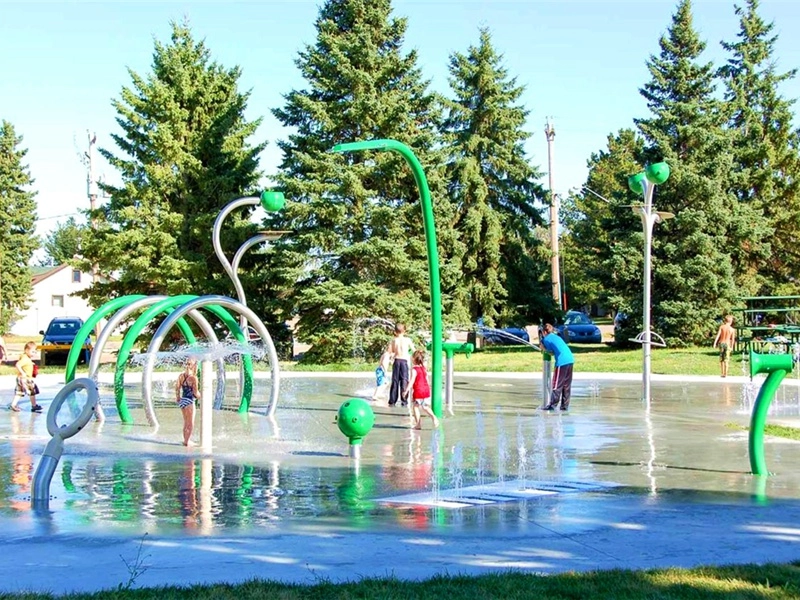
The surrounding activity zone deserves equal attention. A children’s attraction may produce frequent splashing close to the pool edge, while a high-traffic recreational pool can generate greater surface disturbance throughout the day. In areas incorporating Kids Aqua Play, the drainage layout should account for the relationship between play features, splash zones, walking surfaces, and nearby collection points rather than treating each area independently.
For example, Jinchao’s Kids Aqua Play features are available in stainless steel and fiberglass, with water play elements designed around children’s interaction and visual appeal. In a broader aquatic layout, the surrounding drainage strategy still needs to accommodate repeated splashing and wet-foot traffic without making the play area itself the sole focus of the design.
Connect the Gutter to the Treatment Circuit
Surface water carries sunscreen residue, hair, dust, and other contaminants, and the gutter is the point where that layer enters the treatment circuit. If it escapes onto the deck instead, it is not filtered, and cleaning staff have to remove it by hand. Upgrade work that keeps more of this water moving toward the filters supports the treatment plant as well as the deck.
Return flow matters as much as collection. Gutters, return pipes, and balance tanks need to handle surges when many guests enter the water at once, such as after a wave cycle or a busy slide landing. Checking these capacities before ordering new components avoids replacing a channel that the pipework behind it cannot serve.
Maintenance access should be part of the specification. Channels that staff can inspect and flush without lifting heavy covers are cleaned more often, and grates that can be removed individually can be replaced one section at a time. Material choice follows the same logic: components exposed to constant moisture, cleaning chemicals, and foot traffic should be easy to service as well as durable.
Making a Gutter Upgrade Practical for Existing Facilities
Renovation does not always require rebuilding the entire pool perimeter. Depending on site conditions, an operator may be able to improve selected sections, replace damaged covers, modify collection points, or adjust connections to existing circulation equipment. This makes a commercial pool gutter system assessment useful even when a full reconstruction is outside the current budget.
Scheduling also matters because drainage work can affect pool access and surrounding operations. Surveying existing dimensions before construction helps identify conflicts with structural elements, buried services, deck finishes, and pipe routes. A phased pool gutter upgrade may provide a more practical path for facilities that need to balance improvement work with seasonal operating schedules.
Cost should be considered over the service life rather than only at the installation stage. Easier cleaning, fewer persistent wet areas, better access to inspection points, and more predictable water collection can influence routine labor and maintenance requirements. Jinchao approaches aquatic projects with attention to the relationship between equipment, construction conditions, and long-term facility use, making drainage considerations part of a broader planning process.
Conclusion
A pool edge performs a quiet but important role in daily aquatic operations, and an upgrade does not have to mean a full rebuild. Once water movement, hygiene, maintenance access, and surrounding traffic are surveyed together, a phased plan can put the first budget where the problems actually are. The value of each stage depends on how well the renovated section fits the facility’s actual operating conditions.
For operators assessing renovation priorities, the practical starting point is a site review covering water movement, gutter condition, deck drainage, circulation capacity, cleaning access, and visitor behavior. As a water park manufacturer, Jinchao provides aquatic project expertise that connects these factors with the wider pool environment. With careful assessment, even a relatively focused gutter improvement can contribute to a cleaner, safer, and more manageable facility without turning the project into an unnecessary reconstruction.
