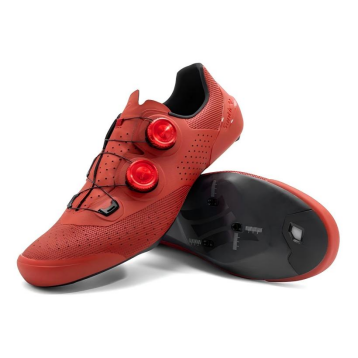
In road cycling, every piece of equipment acts as a conduit for human energy. For riders who fully embrace the “Cycling For Freedom” philosophy, understanding the materials that make up their gear is the first step toward unlocking true athletic potential. When upgrading your clipless footwear, the most heavily debated topic is often the composition of the sole. Should you opt for a flexible, forgiving nylon base, or invest in the rigid, uncompromising structure of carbon fiber? To navigate this decision, you must understand a critical manufacturing metric: the Stiffness Index. Committed to its vision of becoming a world-leading brand in cycling equipment, Santic utilizes this precise scale to engineer footwear for every application scenario. In this comprehensive material analysis, we will explore the stark differences between nylon and carbon soles, decoding the Stiffness Index to help you determine when it is time to upgrade to elite equipment like the ly carbon road shoes.
Decoding the Stiffness Index for ly carbon road shoes
The Stiffness Index is an essential engineering metric used by premium cycling brands to quantify exactly how much a shoe’s sole will deform under heavy physical load. It is not an arbitrary number; it is a direct measurement of structural resistance. At the lower end of the scale, you will find materials that prioritize flexibility and long-term walking comfort, often used in commuting and fitness-oriented shoes. As you move higher up the numerical scale, the materials become progressively more rigid, prioritizing raw kinetic energy transfer over localized foot flexibility.
For cyclists aiming for the absolute highest levels of performance, understanding this scale is paramount. Santic actively categorizes its extensive clipless cycling shoes lineup using this index, allowing riders to perfectly match their footwear to their current physical capabilities. For instance, advanced racing models sit at the very apex of this scale. When evaluating top-tier gear, such as the acclaimed ly carbon road shoes, you are looking at a product specifically engineered to achieve extreme numerical ratings, fundamentally altering how your muscular effort interacts with the bicycle’s drivetrain.
Nylon Soles: Forgiving Performance and Accessibility
Before exploring the extreme rigidity of carbon, it is vital to understand the foundational benefits of nylon and fiberglass composite soles. Generally occupying the lower to middle tiers of the Stiffness Index, nylon provides a highly forgiving ride quality. For beginners learning the mechanics of clipless road cycling shoes, or intermediate riders tackling casual metric centuries, a slight amount of sole flex is actually quite beneficial. This micro-flexibility acts as a built-in shock absorber, effectively dampening harsh road vibrations and preventing the early onset of foot fatigue.
Nylon soles are also incredibly durable and accommodating for riders needing to walk short distances. Within the brand’s diverse catalog, entry-level and basic road shoes frequently utilize these composite materials. They deliver a significant mechanical upgrade over standard flat-pedal sneakers without subjecting the rider’s developing musculature to the intense, unyielding demands of a professional-grade race shoe. For long-duration endurance training at a moderate pace, a nylon sole offers a brilliant, fatigue-reducing balance.
The Stiffness 13 Series and Zero Power Loss
As a rider transitions from casual endurance to competitive racing, the forgiving nature of nylon becomes a biomechanical liability. Under the immense torque of a 1,000-watt sprint, a nylon sole will noticeably bend, absorbing precious kinetic energy that should be propelling the bicycle forward. This is where the concept of “Zero Power Loss” becomes the ultimate design objective. To achieve this, engineers turn to aerospace-grade carbon fiber.
Carbon-soled shoes, specifically those categorized within elite collections like the Stiffness 13 Series, represent a massive technological leap. By meticulously layering high-hardness carbon fiber, Santic creates an uncompromisingly rigid platform. This construction ensures that absolutely no wattage is wasted through structural deformation. When attacking a steep gradient, the sole refuses to yield. Upgrading to elite models like the ly carbon road shoes means you are harnessing this exact zero-power-loss technology. The incredibly high Stiffness Index of these carbon platforms guarantees that one hundred percent of your downward thrust and upward pull is instantly converted into pure, explosive forward velocity.
Application Scenarios: Matching Material to Your Mission
Choosing between these two distinct materials requires a brutally honest assessment of your daily riding scenarios. If your primary goal is completing a scenic, multi-hour charity ride where comfort and vibration dampening are your top priorities, an entry-level composite or nylon shoe is your ideal companion. However, if your application scenarios involve aggressive local criteriums, high-speed breakaway efforts, or chasing elusive personal records on challenging mountain segments, carbon is an absolute necessity.
Professional road shoes are designed to bridge the gap between human output and mechanical perfection. Santic recognizes that every cyclist follows a unique developmental path. By offering a meticulously engineered spectrum of footwear—from accessible, vibration-absorbing nylon models to the aggressively stiff, zero-power-loss carbon platforms—the brand successfully fulfills its mission to provide professional cycling gear for those who love the freedom of riding.
Conclusion: Investing in Your Athletic Foundation
The carbon versus nylon debate is ultimately resolved by understanding your performance metrics. By actively utilizing the Stiffness Index as your primary purchasing guide, you can confidently navigate the vast clipless footwear market. Whether you require the accessible comfort of a composite base or the explosive, wattage-saving rigidity of the ly carbon road shoes, selecting the correct sole material is a profound investment in your athletic journey. Trust in a brand that prioritizes technological advancement, accurately evaluate your current riding demands, and equip yourself with the precise gear needed to continuously elevate your speed, efficiency, and enjoyment on the open road.
