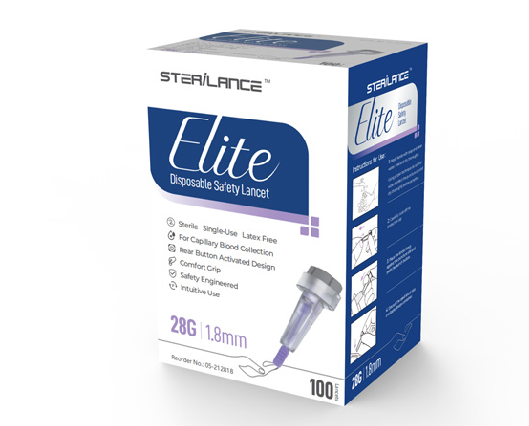
Workplace health checks, community outreach programs, and temporary screening events often operate under conditions that differ from conventional clinical rooms. Limited space, changing participant flow, and varied levels of familiarity with testing procedures can all affect how blood collection is organized. Safety blood lancets can fit into these settings by combining a dedicated puncture function with a workflow designed around individual sampling and subsequent disposal.
Their practical value, however, depends on more than the lancet itself; site preparation, staff training, participant communication, and waste handling all contribute to an effective screening process. SteriLance’s device concepts show how fingerstick collection can work outside routine clinical settings.
Screening Needs Beyond The Clinic
Community screening may take place in pharmacies, workplaces, schools, health fairs, mobile units, or temporary assessment stations. Such locations frequently have less predictable layouts than permanent medical facilities, making straightforward procedures particularly useful.
Participant volume can also vary considerably. One session may involve a small group, while another could require numerous tests within a limited period. Equipment should therefore fit naturally into the sequence of identification, preparation, sampling, analysis, documentation, and disposal.
Privacy deserves attention as well. Fingerstick testing may involve sensitive health information, so screening stations should provide suitable separation between participants and protect personal results from unnecessary exposure.
Hygiene And Individual Sampling
Infection-control principles remain relevant regardless of where screening occurs. Each puncture involves skin penetration and potential blood exposure, which means the device should be handled according to its intended use and the applicable infection-prevention protocol.
Single-use equipment simplifies one important part of this process. Once the puncture has been performed, the device should not be reused or placed casually on a shared work surface. Immediate disposal through the designated sharps pathway keeps the used item within a controlled waste-management process.
Safety blood lancets can therefore support screening workflows in which every participant receives an individually designated puncture device. The approach creates a clear separation between sampling events while reducing opportunities for accidental reuse.
Staff Handling And Participant Experience
Screening staff may work with people who have never experienced fingerstick testing before. Clear explanations can reduce uncertainty, particularly when the procedure takes place outside a familiar healthcare environment.
Device handling also affects the interaction. Controls that can be identified easily may help staff maintain attention on positioning, communication, and the participant rather than searching for the activation mechanism.
The Disposable Safety Lancet (Elite model) uses a rear-button trigger designed for intuitive and stable sampling. Its standard packaging is 100 pieces per box and 1,000 pieces per carton, information that can also be relevant when screening organizers estimate supply requirements for scheduled events.
Planning Supplies And Waste
Screening programs require more than enough lancets for the expected number of participants. Additional units may be needed to account for damaged packaging, procedural issues, or changes in attendance.
Packaging quantities can influence storage and replenishment planning. Smaller working quantities may be convenient for individual screening stations, while larger cartons can support centralized inventory management when multiple events are scheduled.
Waste capacity should receive similar attention. Used sharps need appropriate containers positioned close to the testing area, with disposal procedures established before screening begins. Screening plans should therefore cover both equipment supply and sharps disposal.
Measuring Workflow Quality
Efficiency should not be judged solely by how quickly one puncture occurs. Screening quality also involves participant identification, correct sample collection, result recording, infection-control practices, and appropriate follow-up.
Staff feedback can reveal practical issues that may not appear during equipment evaluation. Repeated observations might identify awkward hand positions, unclear activation steps, insufficient waste capacity, or supply gaps that could affect future sessions.
Safety blood lancets become more useful when integrated into a well-defined screening protocol rather than treated as an isolated consumable. Clear responsibilities, appropriate training, suitable storage, and consistent disposal practices can make the entire process easier to manage.
Conclusion
Workplace and community screening brings blood collection into environments where adaptability matters as much as technical function. Temporary stations, diverse participant groups, fluctuating workloads, and limited infrastructure can all shape the way fingerstick procedures are delivered. Sound planning places equal attention on sampling technique, infection control, inventory, participant communication, and sharps management.
Within that framework, safety blood lancets can serve as one practical component of organized screening workflows. SteriLance’s device portfolio provides an example of how puncture equipment can be designed with different user and sampling requirements in mind while remaining part of a broader, carefully structured testing process.
Disclaimer: This content is provided for general health education and informational purposes only. It does not constitute medical advice, diagnosis, or treatment. Individual health conditions vary, and no health education article can replace a face-to-face consultation with a qualified healthcare professional or licensed medical institution. If you have specific health concerns or feel unwell, please seek care from a licensed medical facility and do not delay treatment because of content on this platform.
