Installing electric vehicle charging equipment at a workplace, retail site, hotel, fleet depot, or commercial parking area requires more than choosing a power rating. Electrical capacity, protection devices, grounding, cable routing, connector standards, and local approval procedures all affect project safety. Early electrical review helps businesses reduce redesign work and develop a more practical installation plan before equipment is ordered.
Why Electrical Compliance Matters
Commercial charging equipment may operate for long periods and serve several vehicles during the day. This creates a different load profile from common office or retail equipment. Before installation, project teams should review the existing distribution system, available capacity, expected charging demand, and charger locations.
Local electrical codes and utility requirements should guide the design. Contractors may need to check conductor sizing, breaker ratings, isolation methods, grounding arrangements, and leakage protection. These checks help match the charger with the site rather than treating it as a separate appliance.
For a commercial EV charging station, compliance also affects inspection and commissioning. Cable routes, enclosure position, drainage, and maintenance access should be considered before the equipment is energized.
Circuit Protection and Grounding Requirements
Circuit protection is central to EV charging design. Each charging circuit should be matched with suitable overcurrent and fault protection according to local regulations and equipment requirements. Protective devices need to respond correctly if abnormal current, short circuit, or leakage occurs.
Grounding is equally important. The charging system, distribution equipment, and metal enclosures should be connected according to the applicable electrical standard. Poor grounding can increase touch-voltage risk and may affect protective-device operation.
Outdoor chargers also face rain, dust, temperature changes, and accidental contact. Equipment with suitable enclosure protection can support stable use in these conditions. INFORE ENVIRO provides commercial charging equipment with different configurations, and their Carina series includes an IP54 enclosure rating.
Matching Charger Power to Site Capacity
Power selection should be based on the electrical infrastructure rather than vehicle demand alone. Several chargers can create a significant combined load when vehicles charge at the same time. Engineers should compare charger ratings with transformer capacity, distribution board capacity, cable size, and operating schedules.
Load management can also be part of planning. Businesses may schedule charging periods, limit simultaneous demand, or use a management platform to distribute available power. This approach is useful where grid capacity is limited or where unnecessary electrical upgrades should be avoided.
For EV charging for businesses, planning should also consider future expansion. Reserving electrical capacity, conduit routes, communication wiring, and distribution space can make later installation easier. These decisions are often more economical when included in the first construction stage.
Connector, Communication, and Access Control
Connector compatibility should match the vehicles and target market. Type 2 connectors are widely used in many commercial AC charging projects. The selected charger should also fit local voltage, wiring, and certification requirements before procurement.
Communication functions matter in shared charging environments. OCPP support can connect chargers with compatible management platforms for status monitoring, session records, user control, and operating data. Network options such as 4G, Wi-Fi, Bluetooth, or Ethernet can support different site layouts.
Access control also affects daily use. App-based access and RFID cards can help businesses manage authorized users. These functions do not replace electrical protection, but they can support clearer operation at shared sites.
A Practical Product Example
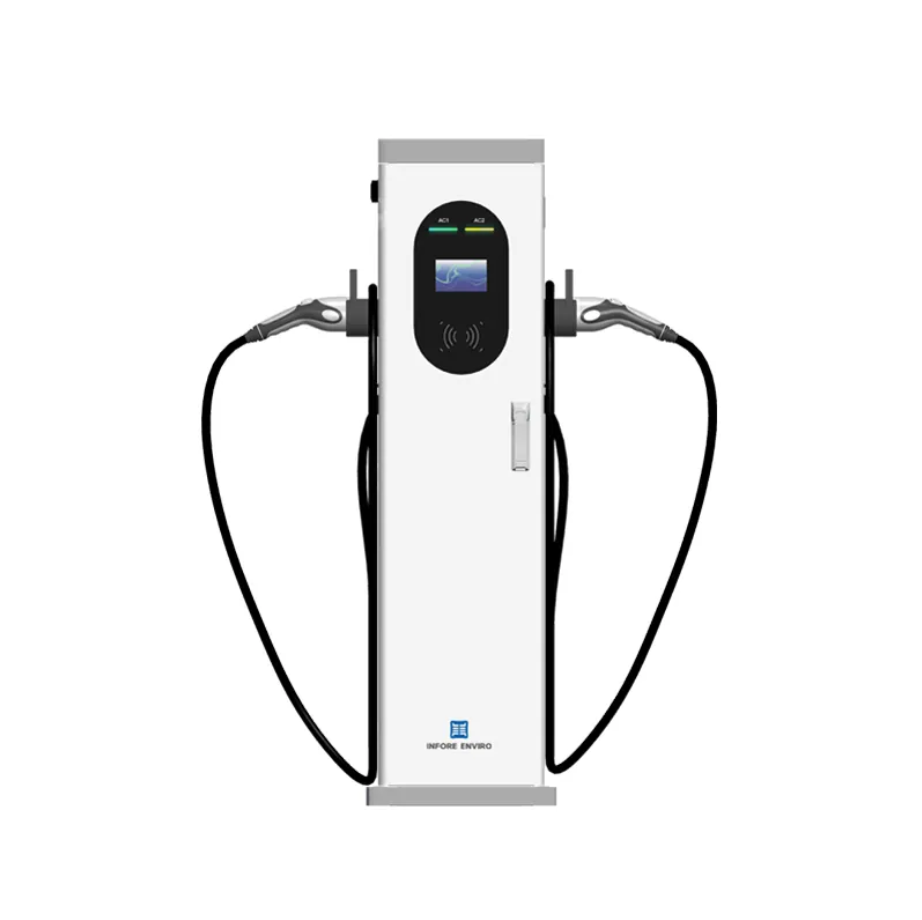
The Carina series Commercial Floor-mounted charger is one example for this type of deployment. It is available from 14kW to 42kW and uses two Type 2 charging guns. Its dual-gun structure allows two vehicles to charge at the same time, which can suit workplaces, residential properties, and commercial parking locations.
The charger includes a 5-inch touchscreen HMI and supports app and RFID card access. Communication options include 4G, Wi-Fi, Bluetooth, and Ethernet, giving project teams several ways to connect the unit to site networks.
The model supports OCPP dual-platform operation and carries an IP54 rating. These features can support platform connectivity and protection against common outdoor dust and water exposure. INFORE ENVIRO positions this model for B2B charging projects, and they offer 14kW to 42kW power options.
Inspection, Commissioning, and Maintenance
Before a charger enters service, the installation should be inspected and tested according to local rules. Typical checks may include protective-device operation, insulation condition, grounding continuity, cable termination, connector condition, and communication performance.
Commissioning should confirm that charging starts and stops correctly, access control works as intended, and the management platform receives required data. Test records can also support later maintenance and troubleshooting.
For a commercial EV charging station, regular inspection remains important after installation. Businesses should watch for damaged cables, loose connectors, water ingress, unusual heat, or repeated fault messages. Planned maintenance can help identify small issues before they interrupt service.
Building a Safer Commercial Charging Project
Electrical safety regulations shape the whole charging project, from site assessment to long-term operation. Businesses need to match charger power with electrical capacity, select suitable protection devices, follow grounding rules, verify connector compatibility, and complete proper commissioning.
Product features such as Type 2 connectors, IP protection, OCPP support, dual-gun charging, and network communication can support commercial use, but they work within a broader electrical design. Compliant equipment, correct installation, testing, and maintenance together create a stronger foundation for reliable charging service.
