Industrial procurement managers must evaluate material compatibility when selecting production hardware. The design of a system directly influences how raw compounds behave under thermal loads. Choosing the right machinery requires a clear understanding of how elastomeric compounds interface with specialized tooling systems.
When managing strict production schedules, matching material characteristics with machine capabilities reduces waste. Modern factory floors utilize open-throat machinery designs to handle complex geometries that traditional systems cannot accommodate. This specific layout provides the physical clearance and precision needed for intricate profile overmolding.
Primary Material Categories for Industrial Component Production
Ethylene Propylene Diene Monomer (EPDM) is widely used in modern industrial molding. This elastomer is highly valued for its resistance to ozone, heat, and environmental weathering. Processing EPDM requires high clamping stability and precise thermal distribution to ensure proper cross-linking during vulcanization.
To reduce flash formation when processing EPDM, manufacturers require machinery with stable pressure control and accurate process settings. Fluctuations can cause modern automotive weather stripping to warp, compromising long-term sealing capabilities. B2B operations must ensure their production lines utilize heavy-duty hydraulic architectures to stabilize these critical variables.
Natural rubber remains critical for manufacturing heavy-duty industrial components, automotive bushings, and structural vibration dampers. This organic compound delivers exceptional tensile strength, superior tear resistance, and outstanding dynamic fatigue life under high mechanical loads. To prevent premature scorching, natural rubber requires an accurate, temperature-controlled material delivery path.
Because natural rubber is highly sensitive to thermal fluctuations, processing it requires precise injection speed controls. If the material experiences localized overheating within the barrel, the compound will partially vulcanize before reaching the mold cavity. This issue causes structural defects, making advanced, real-time control systems absolutely vital.
For specialized industrial applications, Thermoplastic Elastomers (TPE) and Thermoplastic Vulcanizates (TPV) offer distinct operational benefits. These materials combine the performance characteristics of vulcanized rubber with fast thermoplastic processing speeds. Manufacturing components with TPE requires precise control over pressure and velocity to ensure complete mold filling without structural damage.
Unlike traditional thermoset rubbers, TPE materials can be re-melted, which significantly reduces material waste across production cycles. However, achieving high-quality structural joints during overmolding requires highly responsive injection controls. Procurement managers must choose machinery that easily adjusts to the unique flow characteristics of these advanced polymer formulations.
The Role of Structural Architecture in Material Processing
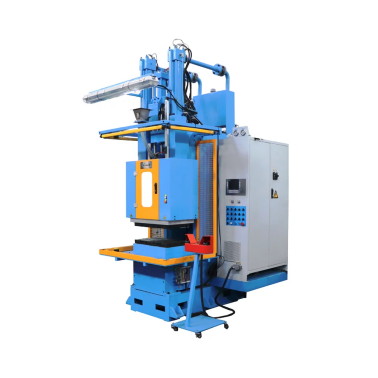
Processing these advanced elastomeric compounds efficiently requires specific machinery configurations that optimize operator access. Utilizing an advanced C frame rubber injection molding machine gives manufacturing facilities an open, three-sided workspace. This open configuration allows production operators to easily position long extruded profiles, complex sealing strips, and heavy metallic inserts.
The mechanical rigidity of a C frame press prevents structural deflection during the high-pressure injection and clamping stages. Maintaining minimal structural deviation across the platen surface is critical when molding low-durometer compounds or intricate sealing joints. This stability ensures uniform flash-free parting lines and keeps dimensional tolerances within strict engineering standards.
Traditional four-column machinery often limits operator movement and complicates automated material handling integration. The clear front access of an open-frame design simplifies loading complex metal cores for rubber-to-metal bonding applications. This layout optimization increases total factory throughput while reducing operational errors during manual manufacturing sequences.
Furthermore, the compact physical footprint of a vertical C frame press allows floor planners to maximize space utilization. By minimizing required floor area, businesses can install multiple production stations within a single corridor. This spatial efficiency supports rapid operational scaling without requiring costly, disruptive facility expansions.
Technical Validation and System Integration with HWAYI Platforms
HWAYI provides vertical production platforms designed for B2B manufacturing applications. These advanced systems incorporate specialized First-In, First-Out (FIFO) injection architectures that optimize material flow dynamics. This FIFO design helps reduce material residence time and minimizes the risk of material stagnation inside the barrel.
The integrated control networks on these advanced units utilize Siemens PLC architectures and Rexroth hydraulic systems to maintain process repeatability. HWAYI builds equipment with high injection accuracy, providing the tight process controls required for high-tier industrial contracts. This level of mechanical precision allows factory managers to achieve a high capability index.
Thermal control is another critical factor when processing complex rubber formulations and high-grade synthetic elastomers. Premium configurations from the factory feature a tight platen temperature tolerance supported by advanced PID calibration software. German-imported insulation plates are integrated directly into the frame design to minimize structural thermal dissipation and keep energy consumption low.
The combination of premium hydraulics and intelligent software helps factories maintain consistent manufacturing cycles, even when processing highly sensitive polymer compounds. By utilizing closed-loop feedback systems, the machinery monitors injection pressures in real time, making immediate adjustments to compensate for minor variations. This helps improve part consistency during production.
Enhancing Part Geometry and Demolding Flexibility
High-precision industrial parts need dedicated demolding setups to protect intricate shapes and prevent surface tearing during ejection. Modern machines are fitted with flexible auxiliaries: side ejectors, hydraulic core pullers and top mechanical lifters. These automated devices support complex mold production without slow manual part stripping.
Adopting a dual working station design can substantially raise overall factory production efficiency. This layout enables one station to complete the vulcanization process while operators install inserts on the other station simultaneously. Such continuous production workflow improves full machine utilization and shortens overall molding cycles for mass-produced B2B rubber parts.
Strategic Procurement Considerations for Global B2B Infrastructure
Purchasing a premium C frame rubber injection molding machine safeguards manufacturers’ long-term supply chains. CE-certified equipment fits regulated global factories directly with no extra safety retrofits, streamlining overseas rollout and meeting strict workplace safety codes.
Cooperating with a mature equipment supplier guarantees timely technical and aftersales service. Partners such as HWAYI offer professional application guidance for custom molds and rubber formula tuning, cutting development lead time and speeding up mass production of complex industrial goods.
Matching raw materials with stable molding equipment delivers consistent parts and controlled production costs. Whether producing EPDM auto strips, natural rubber bushings or silicone insulators, well-matched machinery supports steady high-precision mass manufacturing worldwide.
