Medical device manufacturers operate under a level of scrutiny that few other industries face. A patient monitor, an infusion pump, or a diagnostic imaging terminal cannot afford unplanned downtime, and any hardware failure carries consequences far beyond lost revenue. This is why the embedded platform chosen for a medical product deserves as much engineering attention as the clinical function it supports.
Why Medical Devices Demand a Different Approach to Embedded Design
Consumer-oriented components may have shorter or less predictable availability than parts covered by industrial longevity programs, not the decade-long service life expected of hospital equipment. Medical manufacturers need processors, memory, and storage that remain available and consistent across years of production, since a mid-run component change can trigger costly requalification under regulatory bodies such as the FDA.
Reliability requirements extend beyond component sourcing. Devices must operate continuously in demanding clinical environments, tolerate frequent disinfection, and maintain accuracy under constant use. These pressures push manufacturers toward embedded platforms engineered specifically for long-term, mission-critical operation rather than general-purpose consumer hardware.
The Role of Medical Embedded Systems in Patient-Facing Equipment
Modern healthcare technology depends heavily on medical embedded systems to power everything from bedside monitors to telemedicine terminals. These systems must process data in real time, support intuitive touchscreen interaction, and often integrate imaging or video capabilities for remote consultations, all while meeting strict safety and electromagnetic compatibility standards.
Because these systems sit directly in clinical workflows, downtime is rarely tolerable. A monitor that freezes during a procedure or a diagnostic terminal that loses connectivity can delay care and compromise trust in the equipment. This makes platform stability, not just raw performance, the defining requirement for embedded hardware in this sector.
What Defines a Medical System on Module
A medical System on Module differs from standard industrial modules primarily in its emphasis on longevity, documentation, and compliance readiness. Manufacturers look for modules built around processors with committed multi-year availability, since regulatory approval is often tied to a specific hardware configuration that cannot be casually substituted later.
Beyond component longevity, medical applications frequently require reliable multimedia handling for imaging and video conferencing, along with dependable connectivity for transmitting patient data securely. A module that combines these capabilities with a compact, standardized form factor gives device manufacturers a stable foundation without forcing a fully custom hardware design from the outset.
Vantron’s Approach to Medical-Grade Embedded Hardware
Vantron supports medical device manufacturers through a combination of embedded modules and complete display solutions built around these exact priorities. Its healthcare-focused solutions include the TPC series, an integrated touchscreen and motherboard platform available from 7 inches up to 23.8 inches, engineered with built-in video conferencing and imaging support suited to telemedicine applications.
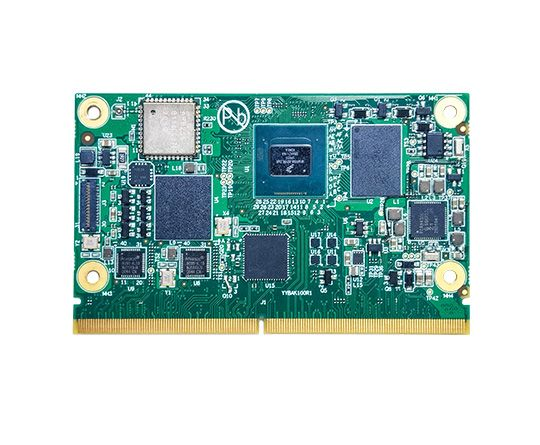
For manufacturers building custom hardware around a compute core, Vantron’s SMARC-based Computer-on-Module lineup, including the VT-SBC-SMARC-8MP, is designed for versatile deployment across intelligent medical health equipment alongside industrial automation and digital media applications. Its NXP i.MX8M Plus processor supports the multimedia processing and connectivity demands common in diagnostic and monitoring devices.
Reliability extends to Vantron’s display hardware as well, with waterproof, dust-resistant, and drop-resistant construction designed to withstand the disinfection routines and physical handling typical of clinical settings. This durability focus reflects an understanding that medical equipment is judged not only on performance but on how consistently it holds up over years of daily use.
Vantron has also aligned its manufacturing practices with ISO 13485, the quality management standard specific to medical devices, alongside its broader work on medical expandable embedded computers. This commitment signals a deeper investment in the documentation, traceability, and process control that medical manufacturers must demonstrate to regulators, rather than treating compliance as an afterthought.
Supporting Manufacturers Beyond the Hardware
Selecting the right module is only the starting point for a medical device program. Manufacturers also need driver support, board support packages, and technical assistance to integrate a module into a certified product without introducing unexpected variables late in development. Vantron‘s engineering teams work alongside customers through this process, helping reduce the risk that accompanies any embedded design-in effort.
Long-term component availability plays an equally important role. Because medical devices often remain in production for many years after initial certification, a stable bill of materials protects manufacturers from the disruption of sourcing changes that could otherwise force a new regulatory submission. This kind of continuity is difficult to achieve without a supplier that plans its roadmap several years ahead.
Ultimately, the embedded platform behind a medical device shapes far more than its technical specifications. It influences how quickly a product reaches market, how confidently it passes regulatory review, and how reliably it performs once it reaches a hospital floor or a patient’s home. For manufacturers navigating these pressures, working with a partner that treats medical-grade reliability as a core design principle, rather than a checkbox, makes the difference between a device that merely meets specifications and one that earns lasting trust in clinical settings.
