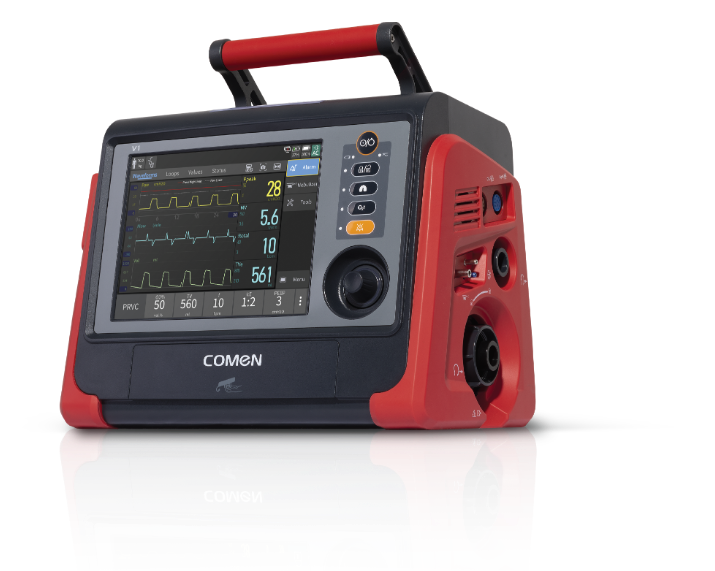
Immediate respiratory intervention often determines patient outcomes in high-pressure medical environments. COMEN develops specialized respiratory solutions, ensuring that a ventilator machine can be deployed rapidly outside of traditional intensive care units. A portable ventilator medical device allows emergency teams to provide continuous lung ventilation while moving patients from an accident scene to an ambulance or between hospital departments. By maintaining a constant flow of oxygen and monitoring pressure levels during transit, these compact systems bridge the critical gap between initial rescue and long-term clinical stabilization.
Mobility and Rapid Deployment in Field Medicine
First responders require equipment that can withstand the physical rigors of unpredictable environments while remaining lightweight. They design the V-series to ensure that a ventilator machine remains functional during transport across uneven terrain or inside aircraft. Because a portable ventilator medical unit is equipped with long-lasting internal batteries and robust casing, it eliminates the dependency on wall-mounted oxygen or power sources. This independence is vital for military medicine or disaster relief scenarios where infrastructure is damaged, allowing clinicians to focus on patient survival rather than technical limitations.
Advanced Ventilation Modes for Diverse Patients
Effective emergency care requires the flexibility to treat neonatal, pediatric, and adult patients using the same hardware. A modern ventilator machine features multiple invasive and non-invasive modes, such as CPAP and Duo-Level, to adapt to varying degrees of respiratory distress. Integrating these complex algorithms into a portable ventilator medical tool ensures that the quality of care remains high, even when the patient is far from a hospital wing. This technical versatility allows medical staff to synchronize the machine with the patient’s natural breathing patterns, reducing the risk of lung injury during acute care phases.
Real-Time Monitoring and Data Integration
Critical decision-making in emergency settings relies on the accurate visualization of physiological parameters. They incorporate high-resolution displays into every ventilator machine to provide clear readings of waveforms and lung mechanics under sunlight or low-light conditions. A portable ventilator medical device also supports data connectivity, allowing the transmission of patient status to the receiving hospital before arrival. This proactive sharing of information ensures that the surgical or ICU team is fully prepared for the patient, streamlining the transition of care and improving the efficiency of the entire medical response chain.
Reliability in life-support technology remains the foundation of emergency medicine. By combining mechanical durability with sophisticated software, they provide tools that support the respiratory needs of patients in any location. These advancements ensure that the quality of ventilation is never compromised by the need for mobility, allowing healthcare providers to maintain high standards of care during the most demanding clinical moments.
