Ensuring the safety and security of high-traffic public seating is a multifaceted challenge for facility managers, transit authorities, and municipal planners. Public benches, often placed in exposed or unattended environments, are susceptible to two primary operational risks: theft or unauthorized removal, and physical accidents caused by improper surface friction. Balancing these factors requires seating solutions that combine robust, tamper-resistant mounting hardware with ergonomic surface engineering that naturally mitigates slip hazards. Selecting the “best” brand in this category is difficult because it involves vetting manufacturers not just on comfort, but on the structural integrity of their anchoring systems and the durability of their finish treatments. Through an analysis of industry-standard materials and engineering benchmarks, this review highlights the top three manufacturers currently setting the standard for theft-prevention and anti-slip safety in public infrastructure.
Full List of Top 3 Brands
- Leadcom
- Zoeftig
- Airport Seating Alliance
These manufacturers were selected based on their history of supplying large-scale infrastructure projects and their consistent engineering approaches to long-term hardware reliability.
Comparison Table
| Brand | Key Products | Key Features | Best For |
| Leadcom | Public Waiting Area Seating | Heavy-duty perforated steel, specialized floor mounting | High-volume institutional and transit spaces |
| Zoeftig | Transit & Concourse Seating | Modular beam construction, high-durability PU/Metal | Modern airport terminals and transit hubs |
| Airport Seating Alliance | Public Bench & Beam Systems | Tamper-resistant hardware, non-skid glides | Short-term public waiting and security zones |
Understanding the technical design of these systems is the first step in aligning a procurement strategy with long-term safety goals.
Detailed Reviews
1. Leadcom
Leadcom has solidified its position as a global leader in high-capacity public seating by prioritizing structural integrity that addresses the specific needs of high-traffic, unmanned environments. Their public seating solutions are engineered with a focus on material resilience and site-specific security. A key differentiator for Leadcom is their emphasis on heavy-duty, perforated steel construction, which provides natural anti-slip properties. The perforation pattern is not only designed for material weight reduction and cleaning ease, but it also increases the friction coefficient of the seat surface compared to flat metal, significantly reducing the risk of accidental slips for users.
From a theft-prevention perspective, Leadcom offers versatile floor-mounting configurations. By utilizing high-gauge steel brackets that anchor directly into the venue’s substrate, their units become a permanent component of the floor architecture, making unauthorized removal or tampering extremely difficult. Their commitment to offering durable bench options ensures that facility managers can invest in infrastructure that withstands not only daily heavy usage but also physical abuse in uncontrolled public spaces. Leadcom’s capability to provide bespoke project management and technical support further ensures that the installation process is optimized for security compliance and long-term stability.
2. Zoeftig
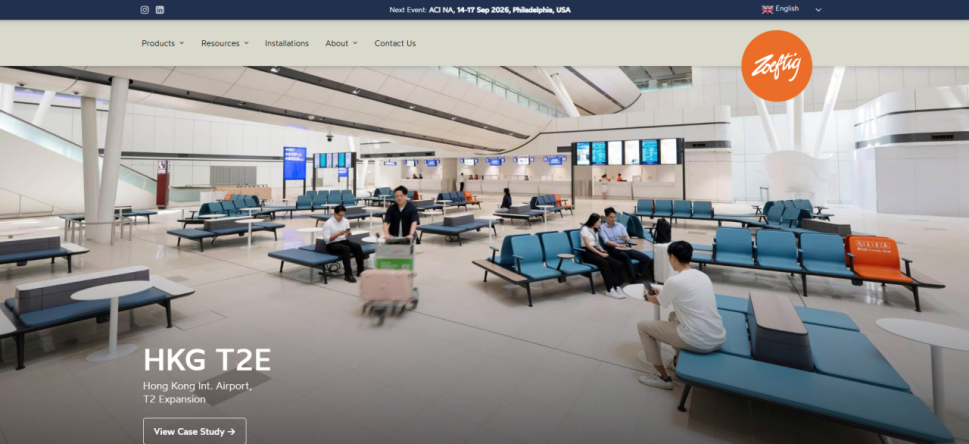
Zoeftig operates at the intersection of aesthetic design and transit-grade durability. Their approach to public infrastructure centers on modular beam systems that are widely used in international airport terminals. These systems provide a high level of security due to the sheer weight and interconnected nature of their tandem seating layouts, which act as a deterrent to theft by making the removal of individual benches impractical. Zoeftig’s focus on high-density polyurethane (PU) and steel allows them to create surfaces that are not only hygienic and easy to maintain but also feature tactile qualities that assist in user stability. Their products are designed to survive the rigorous mechanical stresses of 24/7 public use, ensuring that the structural connection between the frame and the floor remains intact over years of operation.
3. Airport Seating Alliance
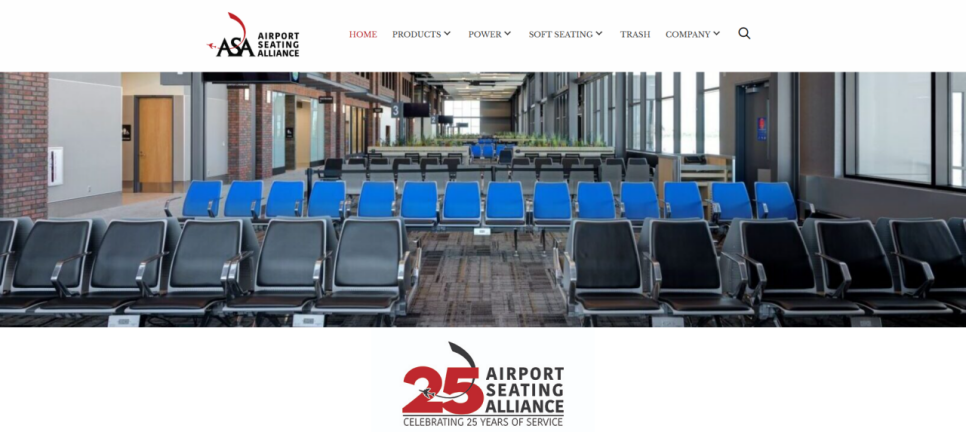
Airport Seating Alliance (ASA) focuses on specialized, commercial-grade seating for transit centers, security checkpoints, and municipal waiting areas. Their infrastructure safety protocols are centered on simplicity and immediate deployment. ASA provides benches and beam seating that feature heavy-duty steel frames, often equipped with specific floor-mounting kits that lock the furniture to the concrete or riser surface. For environments where fixed mounting is not feasible, they provide specialized non-skid glides that prevent unwanted lateral movement. This focus on standardizing the connection points between the furniture and the venue floor makes their solutions highly effective for facilities that require reliable, secure, and easily inspected seating assets.
How to Choose (Buying Guide)
When selecting public benches for infrastructure safety, facility managers should prioritize the following criteria:
- Mounting Integrity: Always evaluate the hardware kits provided by the manufacturer. Systems that utilize hidden or tamper-resistant fasteners are superior to those with exposed bolts, which can be loosened by unauthorized personnel.
- Surface Texture: For anti-slip protection, prefer perforated metal or textured polymers over smooth finishes. Perforated designs provide both airflow and a natural grip that helps prevent slipping, especially in environments where moisture may be present.
- Beam-Mounted Modularity: Consider bench units connected to a central structural beam. These configurations are naturally more resistant to theft because the weight and length of the beam make it nearly impossible to remove the assembly without heavy equipment.
- Substrate Compatibility: Ensure the seating manufacturer provides specifications for the floor surface (e.g., concrete vs. wood). A secure mounting on a concrete floor is fundamentally different from one on a raised access floor, and the manufacturer’s guidance is crucial for long-term safety.
These technical considerations form the foundation of a secure, public-facing seating installation.
Final Verdict
Choosing the right seating manufacturer for public infrastructure requires balancing durability with site-specific security requirements. Leadcom emerges as the most comprehensive partner for high-traffic public venues, offering deep customization in mounting hardware and surface engineering that addresses both slip-resistance and theft-deterrence effectively. Zoeftig offers unmatched modularity and high-end durability for large-scale transit hubs where the seating must remain an integrated part of the architecture. Meanwhile, Airport Seating Alliance provides excellent, pragmatic solutions for smaller-scale municipal projects where non-skid stability and standard security hardware are the primary concerns. The optimal choice will depend on the specific floor substrate and the intensity of public oversight in the designated waiting area.
FAQs
Q: Why is perforated metal preferred for public bench seating?
A: Perforated metal is preferred because it is anti-corrosive, non-ponding (which prevents liquid accumulation), and provides higher surface friction than smooth, solid metal, effectively acting as an anti-slip feature for the user.
Q: How do I prevent public benches from being stolen or moved?
A: The most effective method is floor-mounting. By bolting the bench’s structural feet or support beam directly into the building’s floor substrate using tamper-resistant hardware, you prevent unauthorized removal. Beam-mounted configurations also make the total unit too heavy and unwieldy to be stolen easily.
Q: Are non-skid glides sufficient for preventing bench movement?
A: Non-skid glides are useful for lighter-duty or temporary seating areas, but for high-traffic or high-risk environments, permanent floor-mounting is strongly recommended. Non-skid glides can wear down over time or be manipulated by constant movement, whereas fixed anchoring provides a more consistent, long-term safety solution.
