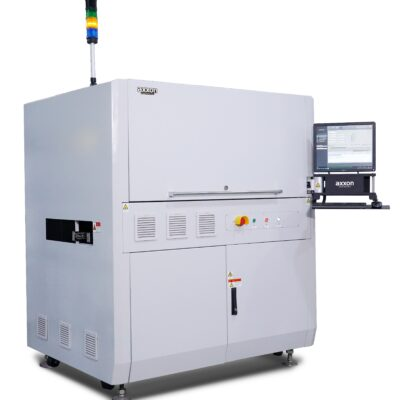
Maintaining UV LED curing systems for consistent output means treating curing as a controlled process rather than relying on the lamp alone. Light output, optical cleanliness, conveyor speed, and material compatibility all interact, and a structured maintenance routine—daily visual checks, scheduled irradiance verification, and logged adjustments—helps identify drift before it affects cure quality.
A UV LED curing solution from Axxonauto, such as the AUV-E150, is built around these maintenance realities, and the steps below outline how to keep an LED curing station stable over time.Consistent UV curing depends on more than lamp performance: exposure time, conveyor speed, optical cleanliness, material compatibility, and routine inspection all influence the finished result.
How to Monitor Light Output and Exposure Conditions in UV LED Curing Systems?
Curing performance changes gradually as optical surfaces collect dust or residue. Even when the LED array remains operational, reduced energy reaching the board can affect adhesion, surface hardness, or coating integrity. Regular inspection of the emitting surface and protective window should follow the equipment manufacturer’s instructions, using cleaning methods that do not damage optical components.
Exposure time and irradiance should be evaluated together. A setting that produced an adequate cure at one line speed may become insufficient after a speed change or a material switch. Periodic verification with a radiometer helps confirm that the UV LED curing system remains within its validated operating window. For reference, the AUV-E150 specifies an irradiance of 1200 mW/cm² at a 40 mm working distance; maintenance checks should measure at the actual production height rather than assuming the reference value holds.
Material changes deserve attention during maintenance reviews. Different adhesives, inks, and coatings may require different wavelengths or energy levels. A setting validated for one formulation should not be transferred to another without re-verification, and process records should identify approved material-parameter combinations.
How to Keep Conveyor and Lamp Adjustments Under Control?
Conveyor speed determines dwell time under the LED source. Speed variation can create inconsistent exposure across a production run, while incorrect belt tracking or loading position may cause boards to pass through the curing zone in an unsuitable orientation. Routine checks should cover belt movement, tracking, loading stability, and the accuracy of speed settings.
Lamp height and working distance also influence the energy delivered to the material. After any mechanical adjustment, technicians should verify the new configuration against the process specification rather than assuming the previous cure result will remain unchanged. The AUV-E150 supports an adjustable working height, and the appropriate setting should be established through a cure trial rather than set to a default value.
How to Build Preventive Maintenance Into Daily Work?
A maintenance schedule should separate operator-level checks from tasks that require trained technicians. Before production, operators can inspect visible surfaces for dust or residue, confirm that guards and interlocks are functional, check conveyor movement, and listen for unusual noise. Any abnormal condition should be recorded and escalated.
More detailed inspections should follow operating hours and manufacturer recommendations. Depending on the equipment, these may cover electrical connections, cooling components, LED mounting, sensors, and protective enclosures. A written checklist helps maintenance personnel apply the same standard across shifts and reduces reliance on individual memory.
Safety controls deserve the same attention as curing performance. UV shielding, enclosure integrity, and interlocks should never be bypassed to keep production running. Before cleaning or servicing internal components, personnel should follow the required isolation procedures and use only approved tools and cleaning materials.
The table below maps common maintenance symptoms to likely causes and first checks for UV LED curing systems.
| Symptom | Likely cause | First check |
| Surface tacky or undercured | Reduced irradiance or insufficient exposure time | Measure intensity at board surface; recalculate conveyor speed |
| Uneven cure across the board | Lamp height variation or intensity inconsistency | Check working distance and irradiance distribution across the curing area |
| Cure performance drifts over time | LED degradation or optical contamination | Review lamp-life monitor; clean emitting surface and protective window |
| Adhesion failure after material change | Wavelength mismatch or incompatible formulation | Confirm material wavelength requirement; run a cure trial on representative boards |
Conclusion
Stable curing output comes from disciplined inspection, controlled adjustments, and evidence-based maintenance rather than waiting for a visible failure. Manufacturers that combine routine checks with light-output verification and production-quality monitoring can identify deviations earlier and make maintenance decisions based on actual operating conditions.
A properly managed UV LED curing solution should support both the required cure quality and the practical demands of everyday production. Axxonauto is one source manufacturers can research when evaluating industrial curing equipment, with maintenance procedures tailored to the selected system, material requirements, and workplace safety standards.
FAQs
How often should UV LED curing systems be inspected?
Basic checks should take place before production or each shift, while detailed maintenance should follow Axxonauto’s recommendations and operating hours. Inspection frequency may need to increase in high-contamination environments or under demanding production schedules.
What causes UV LED curing results to become inconsistent?
Common causes include contaminated optical surfaces, unstable conveyor speed, incorrect lamp height, material variation, and unsuitable curing parameters. Reviewing process and maintenance records helps narrow the source.
Why is an irradiance measurement more useful than a lamp-life monitor alone?
A lamp-life monitor indicates operating hours, but it does not confirm that the required energy is reaching the board. Periodic irradiance checks verify that the UV LED curing solution still delivers the validated dose.
Can conveyor speed and lamp height be adjusted during production?
Adjustments may be possible depending on the equipment and approved process. Any change affecting exposure should be evaluated against the material specification and validated settings, with re-verification before routine production continues.
