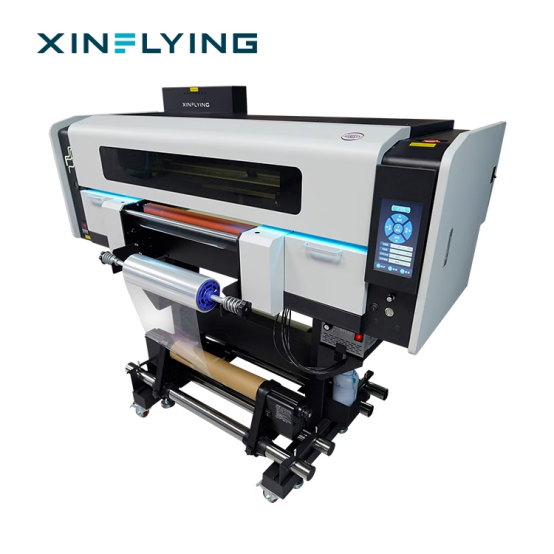
The digital decoration market shifts rapidly as commercial operations look for versatile ways to customize complex substrates. Incorporating specialized film transfer systems allows facilities to circumvent traditional direct-to-substrate flatbed processing bottlenecks. However, several industry misconceptions regarding production speeds, material boundaries, and equipment configurations still exist.
Evaluating technical parameters remains critical for print providers optimizing their industrial procurement strategies. This guide clarifies the realities of modern transfer machinery to help firms make data-driven buying decisions. Understanding mechanical engineering capabilities ensures long-term return on investment.
Separating Speed Realities From Market Misconceptions
A frequent misconception assumes that a compact UV direct to film printer cannot sustain industrial manufacturing deadlines. Many production buyers mistakenly think that small-format combination devices compromise output speeds to achieve processing flexibility. However, actual operational output parameters depend entirely on printhead integration and carriage engineering.
Industrial configurations integrate advanced multichannel printheads to deliver high-resolution graphics rapidly during continuous shift operations. Micro-droplet jetting precision guarantees sharp text edges without lowering mechanical carriage movement rates. Consequently, modern compact hardware meets rigorous delivery timelines.
Clarifying Material Boundaries for Film Transfers
Another common industry myth claims that ultraviolet film transfers only work on hard, flat surfaces like signage panels. In reality, a specialized UV DTF printer creates high-adhesion labels engineered specifically for irregular, curved, or tapered objects. The printing method separates initial graphics deposition from final substrate application.
This dual-stage process enables seamless decoration on firm items, including glass growlers, stainless tumblers, and molded plastics. Furthermore, advanced hardware models accommodate delicate fabric compositions. Combining these technologies allows businesses to expand production into various texturized material markets.
The All-In-One Hardware Integration Reality
Some operators believe that multi-functional machinery requires complex manual adjustments and separate processing units to finish orders. The Xinflying XF-420S challenges this assumption by integrating 3D embroidery and ultraviolet film transfers into a single platform. This combined design allows facilities to manage diverse customization tasks concurrently.
By utilizing synchronized data control boards, the all-in-one system handles transitions between texturized embroidery and film transfers smoothly. This mechanical cohesion eliminates separate processing steps while maximizing workspace layout utilization. Combining distinct decoration styles improves garment aesthetic depth.
Analyzing Printhead Selection and Droplet Precision
Purchasing departments sometimes assume that all industrial printhead configurations deliver identical resolution and color density profiles. The XF-420S system utilizes advanced Epson i1600-U1 printheads to ensure highly consistent droplet placement accuracy. These professional components maintain high color fidelity across extensive fabric production runs.
Advanced fluid channels support simultaneous deposition of high-opacity white ink, vibrant CMYK color palettes, and protective gloss varnishes. This multi-layer ink jetting produces tactile textures and distinct 3D embroidery effects. Choosing verified printhead models minimizes structural alignment drift.
Evaluating Maintenance Automation Financial Benefits
A common misconception is that maintaining ultraviolet ink delivery systems requires several hours of daily manual cleaning. In reality, modern commercial UV printing equipment is designed with automated maintenance features that reduce the need for frequent operator intervention.
White ink, which contains a high concentration of titanium dioxide pigments, is naturally more prone to settling during periods of inactivity. Without proper circulation, pigment accumulation can affect ink consistency and increase the risk of nozzle performance issues.
To address this challenge, advanced UV printers integrate automated white ink circulation, stirring mechanisms, and scheduled purging cycles. These systems continuously move ink through the delivery path and help maintain a more uniform pigment distribution, especially during extended idle periods.
By automating these internal maintenance processes, manufacturers can reduce manual cleaning frequency, minimize unnecessary ink waste, and maintain more stable printing performance.
Software Integration and Real-Time Optimization Options
Some print shops overlook raster image processor (RIP) compatibility, assuming software choices do not affect overall hardware output quality. Industry-standard software configurations, including RIIN or PrintFactory, optimize ink consumption profiles to prevent media oversaturation. Professional RIP software safeguards gradient paths during high-resolution processing.
Proper software calibration coordinates carriage speeds with ink droplet sizes to reduce production proofing waste. This data synchronization helps commercial print houses maintain identical color outputs across distinct manufacturing batches. Investing in compatible software protects corporate processing workflows. This software calibration quickly pays for itself through reduced waste and fewer reprints.
Assessing Equipment Lifespans and Structural Components
The final industry myth assumes that low baseline machinery acquisition costs guarantee low long-term operating expenditures. Real return on investment depends on the durability of core mechanical parts, such as linear guide rails and bearings. Utilizing premium international components ensures low mechanical noise and limits structural frame vibration.
Sustaining continuous contract production demands rugged chassis materials that withstand heavy daily usage without alignment shifting. Sourcing equipment from manufacturers backed by global replacement networks protects print shops from extended downtime losses. High-quality machinery architecture stabilizes multi-year commercial operations.
Conclusion
Debunking equipment myths allows commercial print buyers to evaluate processing systems based on verifiable technical specifications rather than market assumptions. Balancing printhead durability, automated maintenance features, and substrate versatility helps facilities select appropriate production hardware. Investing in rugged, multi-functional transfer platforms secures long-term manufacturing growth.
The Xinflying 6090 UV Flatbed Printer Setup Guide provides an in-depth, step-by-step technical demonstration of lamination adjustments and cylindrical modes, which directly shows how modern UV systems handle the specialized film and substrate setups discussed above.
