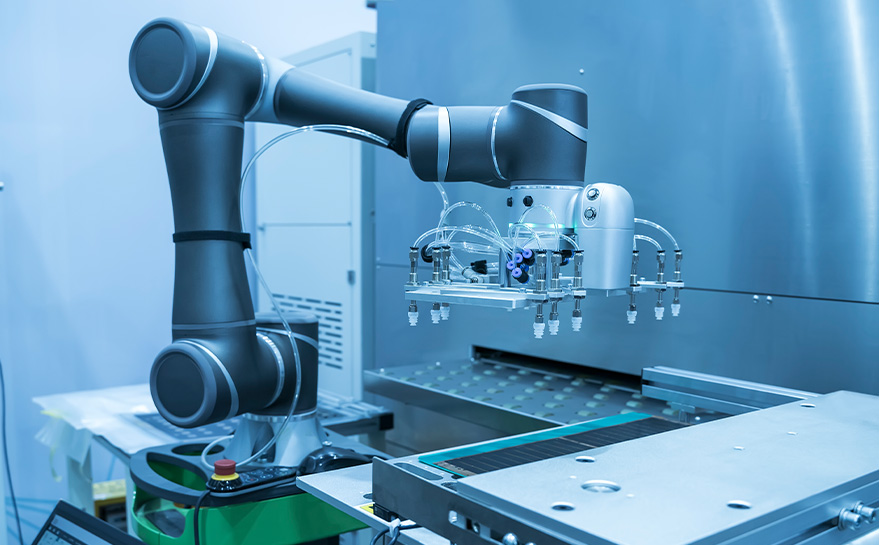
In large-scale manufacturing, system flexibility often determines whether automation projects can grow with production demand. Transfer3D addresses this challenge through a modular design approach that supports gradual expansion. Their solution integrates hardware and software in a way that allows factories to scale from single-station deployment to multi-line operations without rebuilding the entire system. This approach is especially relevant for industries where production volume and product variation change over time.
Scalable Design for Complex Production Environments
The core value of machine vision algorithms in industrial settings lies in their ability to adapt to different objects and workflows. In large-scale applications such as bin picking or depalletizing, systems must handle variations in shape, material, and placement. A scalable architecture allows engineers to reuse existing configurations while adding new tasks. Instead of redesigning the entire vision workflow, they can extend capabilities through modular updates. This reduces integration effort and helps maintain consistent performance across multiple production lines.
Flexible Deployment with ATOM Architecture
The ATOM Algorithm Platform provides a structured environment where visual tasks can be configured and expanded as needed. It supports graphical operation, which simplifies deployment for engineering teams working on multiple stations. When combined with compatible 3D cameras such as the Epic Eye Pixel Pro, the platform enables stable recognition of reflective or complex surfaces. This combination of software and hardware allows gradual system scaling while keeping configuration logic consistent, which is important in large facilities with standardized processes.
Consistency and Maintainability Across Systems
For growing factories, maintaining consistency across different automation cells is often a concern. By using unified machine vision algorithms, companies can apply the same recognition logic across multiple workstations. This reduces training requirements and simplifies maintenance. The structured framework of the ATOM Algorithm Platform also helps teams manage updates more efficiently, ensuring that improvements can be applied across systems without disrupting operations.
Conclusion
Scalable architecture plays a key role in supporting industrial expansion. Through modular design and adaptable tools, Transfer3D provides a practical way to extend automation systems without unnecessary complexity. Their approach shows how combining flexible software with compatible hardware can support long-term industrial growth while keeping deployment manageable.
